

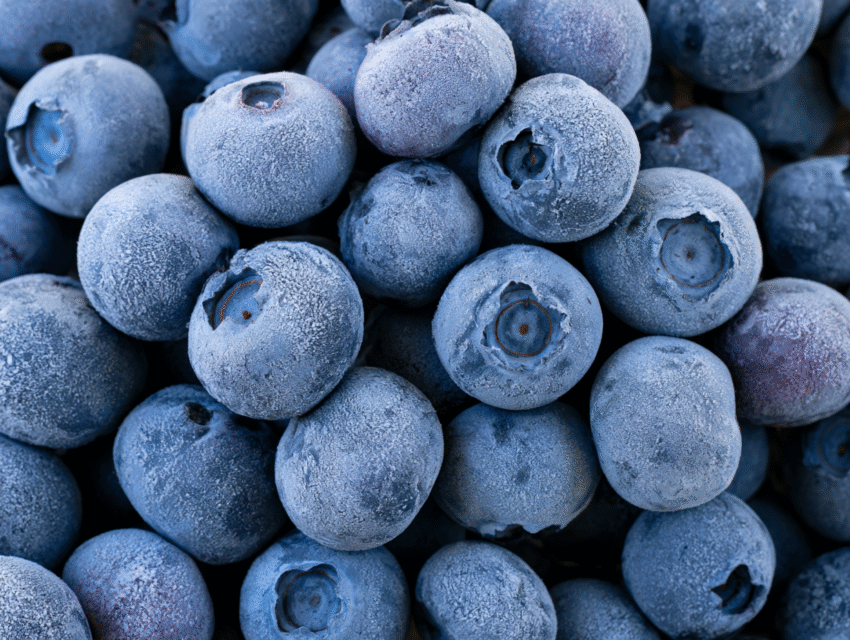
Twelve people infected with E. coli O145:H28 — eleven in Florida, one in Georgia, four hospitalized, no deaths — from frozen GreenWise organic blueberries and mixed berries sold at Publix and packed by Frutas y Hortalizas del Sur S.A. of San Carlos, Chile. Illnesses began between May 11 and June 5. As of today, August 20, 2026, the CDC count is unchanged from July 6, the investigation is still listed as open, and no cause of contamination has been published.
Nothing about the illness picture has moved since July 6. What has moved is the paperwork, and the paperwork has gotten confusing enough that a shopper doing everything right can still get the wrong answer.
The count has not changed since July 6, and the investigation is still open.
CDC’s investigation page was last reviewed on July 30 and carries the same figures it carried on July 6: twelve confirmed cases, four hospitalizations, no deaths, two states. Onsets run from May 11 to June 5, a twenty-five-day span. The people who got sick range in age from 2 to 88, with a median of 43, split evenly between men and women.
Two details there deserve more attention than they have gotten. Seven of the nine people interviewed reported eating frozen blueberries, against 24 percent of respondents in the FoodNet Population Survey — that is CDC putting a number on how far off baseline this is, and it is the strongest published evidence in the file. And whole genome sequencing shows the isolates from sick people are closely related, meaning they got sick from the same source.
CDC also says what it says in every outbreak and what people still forget: the true number of sick people is likely much higher than the number reported, because most people with E. coli recover at home and are never tested. Twelve is the number of people who got a stool culture, not the number of people who got sick.
I should say plainly where I sit in this. Marler Clark represents a man in Georgia and a family in Florida who appear to have suffered E. coli infections in this outbreak. That is why I have been reading the federal pages as closely as I have, and it is how I noticed what follows.
The FDA is running two live pages for this outbreak and they do not agree.
This part is worth checking yourself. The FDA has a current advisory marked content current as of July 30. It lists all four recalled products, describes the remote records review the agency conducted at the Chilean packer, and notes that the company’s frozen blueberries have been added to an import alert.
The FDA also still has an earlier advisory live at a different address, marked content current as of July 6. That one lists a single recalled product: 10-ounce bags with lot code 60401. No mixed berries. No 48-ounce bags. No all-lots recall. No import alert.
Now look at where CDC points people. At the bottom of the CDC outbreak page, under See also, the link labeled as the FDA outbreak investigation goes to the July 6 version — the one that says only one lot is affected.
Follow the federal government’s own link today and you are told a single lot of 10-ounce blueberries was recalled. That is twenty-two days after Publix pulled every lot of both products in both sizes, and two days after the FDA classified all four products Class I, its most serious designation, meaning a reasonable probability of serious health consequences or death. Somebody standing at an open freezer with a 48-ounce bag of GreenWise mixed berries, checking the page CDC sent them to, would put that bag back.
Here is what is actually recalled.
| Recalled product | Size | UPC |
| GreenWise Organic Whole Blueberries | 10 oz | 41415-06453 |
| GreenWise Organic Whole Blueberries | 48 oz | 41415-12053 |
| GreenWise Organic Whole Mixed Berries | 10 oz | 41415-06753 |
| GreenWise Organic Whole Mixed Berries | 48 oz | 41415-12153 |
All lots of all four products are recalled. Source: Publix recall announcement of July 29, 2026, as posted by the FDA, cross-checked against the FDA enforcement report classified August 18, 2026, which describes the affected code information as all product with an expiration date before February 9, 2028.
The recall got here in stages, which is why so many people are holding a bag they think is fine. On July 3, 2026, the Chilean packer recalled one lot of 10-ounce blueberries. On July 29, Publix recalled all lots of all four products. Anyone who checked a lot code in early July and put the bag back needs to check again, because lot codes no longer determine whether a product is covered. Package name and size do.
The recall actually began on June 25, eleven days before the public heard about it.
The FDA enforcement report that carried the Class I classification also carried a date nobody had published before: a recall initiation date of June 25, 2026. Everything written earlier said the end of June, which is Publix’s own phrasing about its internal stop sale.
Line the dates up. Product came off the shelf on June 25. The Florida Department of Health notified the CDC about the illness cluster on July 1. The Chilean packer recalled a single lot on July 3. The FDA posted its outbreak advisory on July 6. Eleven days passed between the day Publix stopped selling these berries and the first day a family with a bag in the freezer could have learned why.
The same report gives the scale. Adding up the four products, the recall covers 182,094 bags — more than 345,000 pounds of one store brand across eight states. Worth noting for anyone else reading the report: the four per-product counts sum to 182,094, not the 184,094 total that has been repeated in coverage this week.
One thing the classification is not: a new discovery. A Class I designation means the FDA finished its own hazard assessment of a recall the company had already started and reached the most serious conclusion available to it. The agency says so itself — it often classifies a recall well after the firm announces, and the classification should not be read as an expansion of what the company did. Nothing new was found in the berries in August.
The recall widened because nobody could say which bags were affected.
It is worth understanding why this recall arrived in pieces, because it is not a Publix quirk. It is how nearly every produce recall in this country works right now. When a lot code cannot be followed from the packing shed through the distribution center to the store shelf, investigators cannot draw a line around the bags that are actually implicated. The only safe recall left is all of them.
There is a federal rule meant to fix exactly this. The Food Traceability Rule, Section 204 of the Food Safety Modernization Act, requires companies handling high-risk foods to keep traceability lot codes and pass them down the chain, so a product can be traced in hours instead of weeks. It was finalized in November 2022 with a compliance date of January 20, 2026. That date was pushed to July 20, 2028. Then, in the law that ended the November 2025 government shutdown, Congress barred the FDA from spending any appropriated funds administering or enforcing the rule before July 20, 2028. The rule is on the books. The agency may not enforce it.
Publix has a documented place in that history. In its own quarterly lobbying disclosure for the second quarter of 2024, filed in-house and signed by John Provenzano, the company reports lobbying the House and Senate on implementation of the Food Safety Modernization Act and on H.R. 7563, the Food Traceability Enhancement Act. That bill would have amended Section 204 so the rule could not require restaurants, retail food establishments and warehouses to keep traceability lot code information or pass it along. It died in committee.
Two things belong next to that, in fairness. The filing is Publix’s ordinary quarterly report, with the food page sitting alongside pages on credit card fees, pharmacy benefit managers, family leave and tax — the company did not register a campaign against traceability. And Publix pulled these berries from its own shelves before any recall issued, then widened the recall to all lots without being made to.
But the two records sit oddly together. One is a company telling Congress that retailers should not have to carry a lot code. The other is a company recalling 182,094 bags of its own house brand because nobody could tell which ones to pull. A working lot code would have drawn a line around one Chilean lot in June and left every other bag on the shelf alone — and the party that stood to lose the most from the wide version of this recall was Publix.
Nobody has said how E. coli got into Chilean blueberries.
Seventy-six days after the last person got sick, there is no published root cause. No environmental assessment. No farm or water sampling result. No positive product sample and no positive environmental sample has ever been announced by anyone. The link between these berries and these illnesses rests entirely on epidemiology and traceback, which in this case is strong, but it is not the same thing as knowing what happened in Chile.
What the FDA has said it did is a remote regulatory assessment — a records review conducted from a distance — rather than walking the facility. Findings from that review raised concerns about additional lots, which is what prompted Publix to widen the recall. The agency has since added the company’s frozen blueberries to Import Alert 99-35, meaning shipments offered for entry to the United States can be detained without physical examination.
As I wrote when this outbreak surfaced, blueberries have almost no history as a Shiga toxin vehicle. Berry outbreaks are overwhelmingly viral and parasitic. That makes the root cause here genuinely important, and it is exactly the question the record still does not answer.
What to do if you have these berries.
Most recalls fade because the product spoils. This one will not. The Best By date on these bags runs to February 9, 2028, and freezing does not kill E. coli — it preserves it as faithfully as it preserves the fruit. A recalled bag can sit in the back of a chest freezer for a year and a half, long after the news cycle ends, and still be exactly as dangerous as it was in May. That is the reason to pull the drawer out and look now, and the reason a stale federal advisory is more than a clerical annoyance.
Do not eat them. Throw them out or return them to Publix for a refund. If you poured the berries into a freezer bag or a container and cannot tell whether they are covered, throw them out anyway — a bag you cannot identify is a bag you cannot clear. Wash and sanitize anything the berries touched, using hot soapy water or the dishwasher.
Call a doctor if you have severe stomach cramps, diarrhea that is bloody or lasts more than three days, a fever over 102, or vomiting bad enough that you cannot keep liquids down. Symptoms usually start three to four days after exposure, though the FDA notes they can begin as late as nine days out. Ask specifically about Shiga toxin-producing E. coli. The complication that matters is hemolytic uremic syndrome, a form of kidney failure that hits young children and older adults hardest, and its early signs — passing very little urine, extreme fatigue, losing color in the cheeks and inside the lower eyelids — are a medical emergency.
Questions people are asking
Is my bag recalled if the lot code is not 60401?
Yes, if it is one of the four products in the table above. The July 3 recall covered one lot. The July 29 recall covers all lots of GreenWise Organic Whole Blueberries and Whole Mixed Berries in 10-ounce and 48-ounce bags. Lot code no longer matters.
Is it safe if I cook the berries?
Thorough cooking kills E. coli, but the recall advice is to discard the product rather than try to cook your way around it. Berries go into smoothies, yogurt and cereal far more often than they go into a hot pan, and cross-contamination in the kitchen is its own risk. Throw them out.
Is the outbreak over?
The CDC still lists the investigation as open, and the FDA still describes its investigation as ongoing. The last known illness began June 5, so the immediate wave has passed, but recalled product with a 2028 date remains in home freezers and the source of contamination has not been identified or fixed publicly.