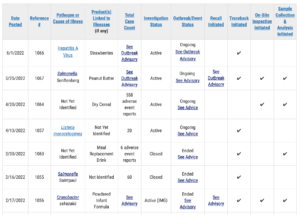
Class I Beef Recall due to E. coli Contamination

West Missouri Beef, LLC has voluntarily recalled 14,000 pounds of boneless beef products due to potential contamination by E. coli O157:H7.  USDA's Food Safety and Inspection Service (FSIS) announced the Class I recall in a press release last night.  It is the third Class I recall this year, and the fifth since November, adding up to 1,636,000 pounds of beef products that have been recalled due to potential E. coli O157:H7 contamination in the last 3+ months.

What is a Class I recall?

A Class I recall, according to FDA definitions, should occur when "there is a reasonable probability that the use of or exposure to a violative product will cause serious adverse health consequences or death."  Class II and III recalls are appropriate only when there is a significantly lesser, or remote, risk of adverse health consequences, or when the health consequences are minor.  Due to its lethal capacity, E. coli O157:H7 is a bacteria that always requires a Class I recall.

What is E. coli O157:H7?

Escherichia coli (E. coli) are members of a large group of bacterial germs that inhabit the intestinal tract of humans and other warm blooded animals (mammals, birds). Newborns have a sterile alimentary tract which within two days becomes colonized with E. coli.

More than 700 serotypes of E. coli have been identified. The different E. coli serotypes are distinguished by their “O” and “H” antigens on their bodies and flagella, respectively. The E. coli serotypes that are responsible for the numerous reports of contaminated foods and beverages are those that produce Shiga toxin (Stx), so called because the toxin is virtually identical to that produced by another bacteria known as Shigella dysenteria type 1 (that also causes bloody diarrhea and hemolytic uremic syndrome [HUS] in emerging countries like Bangladesh) (Griffin & Tauxe, 1991, p. 60, 73). The best known and most notorious Stx-producing E. coli is E. coli O157:H7. It is important to remember that most kinds of E. coli bacteria do not cause disease in humans, indeed, some are beneficial, and some cause infections other than gastrointestinal infections, such urinary tract infections. This section deals specifically with Stx-producing E. coli, including specifically E. coli O157:H7.

Shiga toxin is one of the most potent toxins known to man, so much so that the Centers for Disease Control and Prevention (CDC) lists it as a potential bioterrorist agent (CDC, n.d.). It seems likely that DNA from Shiga toxin-producing Shigella bacteria was transferred by a bacteriophage (a virus that infects bacteria) to otherwise harmless E. coli bacteria, thereby providing them with the genetic material to produce Shiga toxin.

Although E. coli O157:H7 is responsible for the majority of human illnesses attributed to E. coli, there are additional Stx-producing E. coli (e.g., E. coli O121:H19) that can also cause hemorrhagic colitis and post-diarrheal hemolytic uremic syndrome (D+HUS). HUS is a syndrome that is defined by the trilogy of hemolytic anemia (destruction of red blood cells), thrombocytopenia (low platelet count), and acute kidney failure.

Stx-producing E. coli organisms have several characteristics that make them so dangerous. They are hardy organisms that can survive several weeks on surfaces such as counter tops, and up to a year in some materials like compost. They have a very low infectious dose meaning that only a relatively small number of bacteria, less than 50, are needed “to set-up housekeeping” in a victim’s intestinal tract and cause infection.

The Centers for Disease Control and Prevention (CDC) estimates that every year at least 2000 Americans are hospitalized, and about 60 die as a direct result of E. coli infections and its complications. A recent study estimated the annual cost of E. coli O157:H7 illnesses to be $405 million (in 2003 dollars) which included $370 million for premature deaths, $30 million for medical care, and $5 million for lost productivity (Frenzen, Drake, and Angulo, 2005).
 

What is Hemolytic Uremic Syndrome?

Post-diarrheal Hemolytic Uremic Syndrome (D+HUS) is a severe, life-threatening complication that occurs in about 10% of those infected with E. coli O157:H7 or other Shiga toxin (Stx) producing E. coli. D+HUS was first described in 1955, but was not known to be secondary to E. coli infections until 1982. It is now recognized as the most common cause of acute kidney failure in infants and young children. Adolescents and adults are also susceptible, as are the elderly who often succumb to the disease.

How did these otherwise harmless E. coli become such killers? It seems likely that DNA from a Shiga toxin producing bacterium known as Shigella dysenteriae type 1 was transferred by a bacteriophage (bacteria infected with a virus) to harmless E. coli bacteria, thereby providing them with the genes to produce one of the most potent toxins known to man. So potent, that the Department of Homeland Security lists it as a potential bioterrorist agent. Although E. coli O157:H7 are responsible for the majority of cases in America, there are many additional Stx producing E. coli that can cause D+ HUS.

The chain of events leading to HUS begins with ingestion of Stx producing E. coli (e.g., E. coli O157: H7) in contaminated food, beverages or through person to person transmission. These E. coli rapidly multiply in the intestines causing colitis (diarrhea), and tightly bind to cells that line the large intestine. This snug attachment facilitates absorption of the toxin into the circulation where it becomes attached to weak receptors on white blood cells (WBC) thus allowing the toxin to “ride piggyback” to the kidneys where it is transferred to numerous avid (strong) Gb3 receptors that grasp and hold on to the toxin. Organ injury is primarily a function of Gb3 receptor location and density. Receptors are probably heterogeneously distributed in the major body organs, and this may explain why some patients develop injury in other organs (e.g., brain, pancreas).

Once Stx attaches to receptors, it moves into the cell’s cytoplasm where it shuts down the cells’ protein machinery resulting in cellular injury and/or death. This cellular injury activates blood platelets and the coagulation cascade which results in the formation of clots in the very small vessels of the kidney resulting in acute kidney injury and failure. The red blood cells are hemolyized (destroyed) by Stx and/or damaged as they attempt to pass through partially obstructed microvessels. Blood platelets (required for normal blood clotting), are trapped in the tiny blood clots or are damaged and destroyed by the spleen.
 

Mandatory Food Code Adoption by the States: one of many good projects for FDA and Michael Taylor

 As the newly appointed deputy commissioner for food safety at the FDA, Michael Taylor has a lot on his plate.  Many different things to accomplish, not least of which a ramped up, more proactive approach to food safety within the agencies of government.  Perhaps the creation of a unified governmental body for all things food safety?  Maybe giving the USDA and FDA the legal authority to recall products themselves, rather than rely on conflicted food manufacturing companies to do it themselves when they learn about a problem.  Stiffer penalties, including personal liability, for reckless or willful corporate conduct that ends up causing an outbreak?

Another idea went up on foodsafetynews.com today:  the mandatory and continuous adoption of the FDA's Model Food Code, by the states, as a baseline regulatory scheme.  See A Call for Uniform Model Food Code Adoption.  As was stated in the article:

It is time for greater uniformity in our regulatory system. There are more than three thousand state, local, and tribal agencies responsible for regulating the retail foodservice industry, which includes over a million foodservice establishments in the United States. It is time for a federal mandate making the FDA's Model Food Code (the Code) compulsory as a baseline regulatory scheme on all states, territories, and tribal jurisdictions. The FDA apparently agrees, stating on its website: "Adoption of the Food Code represents a successful federal/state/local partnership in improving food safety." 

"FDA and [the Association of Food and Drug Officials'] goal is the prevention and reduction of foodborne illness and death from food produced at the retail level. Adoption of the Food Code by all food safety agencies at the federal, state, local and tribal levels establishes a sound regulatory foundation and legal framework for uniformity in achieving such a reduction."

A question about the FDA's Reportable Food Registry

 On Tuesday, the FDA certainly took a step in the right direction by implementing the Reportable Food Registry, under federal regulations codified at 21 USC 350f.  The FDA's action essentially requires any food producer who knows of a microbial risk (e.g. bacteria or virus that can make you sick) in a food it produced, processed, packed, or held to report the problem to the FDA via the Reportable Food Registry.  As a somewhat necessary evil in drafting legislation or binding regs, the FDA regulations contain some big words that will, unfortunately, leave dedicated compliance to the food producer.  

Actually, I use the phrase "food producer who knows of a microbial risk" above more than a little loosely.  The actual wording, set forth at 21 USC 350, requires a food producer to report "an article of food (other than infant formula) for which there is a reasonable probability that the use of, or exposure to, such article of food will cause serious adverse health consequences or death to humans or animals."

Well, what constitutes a "reasonable probability?"  I can think of more than one instance where a food producer, either in PR statements or through their attorneys in litigation, has offered the excuse to liability that "so and so's E. coli [or any other pathogen] positive stool sample was only presumptively positive."  In other words, initial testing detected the presence of the bacteria, but the bacteria was not conclusively (more loose words) identified as the pathogen de jure by further confirmatory testing.  

The problem would unfold under the Reportable Food Registry very simply . . . something like this:  lettuce producer A generates a positive test for Salmonella in a certain lot of product intended for shipment to grocery stores.  Producer A's positive test came from its own private lab, or any independent third party laboratory--doesn't really matter.  Producer A does not report the initial, presumptively positive test because it believes, realistically or not, that a presumptive positive does not constitute a "reasonable probability that the use of [the lettuce] will cause serious adverse health consequences."  After all, it's only a presumptive positive, not confirmed as something dangerous until the confirming test occurs.  

Well, in this example, the confirming test does, in fact, occur, and it does, in fact, confirm that the bacteria that looked liked salmonella, walked like salmonella, and talked like salmonella was actually . . . salmonella.  In the meantime, the product has been shipped and sold by the grocery stores.  Consumers have eaten it and become ill.  Producer A does finally report the confirmed positive test, but not until after all the damage is done.  

I will point out here that this is not an impossible scenario.  Just last month, a strange sequence of events occurred where more than two weeks passed after a positive test until Melon Acres farm recalled cantaloupes that it had received a salmonella-positive test on.  Now the situation is not identical, but it illustrates the point that delays in testing, and reporting the results of tests, are not unheard of.  I'm sure we'd all be shocked to know how many positive tests actually occur on the food we consume generally.  

And lest we forget, we're only a few short months removed from the massive salmonella outbreak associated with peanuts from Peanut Corporation of America.  If you're reading this, you'll no doubt recall that PCA did not report or recall lots of product for which it received an initial positive test result for Salmonella.  Read this for a brief refresher on this despicable situation.  

In the end, just like the ultimate responsibility for producing safe food, the onus will rest squarely on the shoulders of the food producer to take necessary action to prevent people from getting sick from a product that the producer knows, or really should know, contains a microbial risk.  I admit to being a little biased, maybe even jaded in my confidence that all producers will fully and honestly discharge their obligations under the FDA's new regs.  Time will tell.  

Editor’s note:

According to the FDA press release: “The reporting requirement applies to all foods and animal feed regulated by the FDA (Excludes all beef, poultry, lamb and swine) …. The requirements apply to any person who has to submit registration information to the FDA for a food facility that manufactures, processes, packs, or holds food for human or animal consumption in the United States …. Facilities that manufacture, process or hold food for consumption in the United States now must tell the FDA within 24 hours if they find a reasonable probability that an article of food will cause severe health problems or death to a person or an animal …. Some examples of reasons a food may be reportable include bacterial contamination, allergen mislabeling or elevated levels of certain chemical components (So, if companies limit or stop end product testing? What you do not know will not hurt you? Customer’s perhaps?) …. These people are termed responsible parties.” A responsible party:

1. Must investigate the cause of the adulteration if the adulteration of food may have originated with the responsible party (So, if your supplier causes the contamination, you need to do nothing?) ….

Here is my major beef with this press release: “A responsible party is not required to report if it found the problem before the food was shipped, and corrected the problem or destroyed the food.” So, if a plant tests a sample of the product, but has not yet shipped it, no reporting required? Consider this, sample product testing does not assure that the product is NOT contaminate, only that the sample is. Sample product testing is a method of testing whether your manufacturing process is working. So, if you are getting positive sample tests, you have a problem – a problem that does not need to be reported? A few years ago, we had a case where a manufacturing facility tested end product for E. coli O157:H7 and found positives – for 30 days in a row. The company retained and destroyed those tested lots. However, it was a very small portion of a day’s production. Guess what happened? But, no reporting required?

Three strains of E. coli O157:H7 found in cookie plant

ABC News reported today that three separate strains of E. coli O157:H7 have been found in a Nestle USA cookie dough processing plant.  ABC's Briant Hartman writes about the E. coli testing:

Those tests, according to sources familiar with the investigation and confirmed by the FDA, determined the genetic fingerprint of the E. coli found at the plant is different than E. coli that has been linked to a 30-state outbreak that has sickened at least 72 people.

Sources also say an altogether different strain of E. coli was found in dough recovered from the home of a victim - E. coli O124.

FDA inspectors and CDC investigators have used several different testing methods during the outbreak.  Among them is Pulsed Field Gel Electrophoresis, or PFGE.  PFGE involves finding a bacteria's "fingerprint" by cutting the bacteria's DNA into tiny pieces and using a gel to separate the pieces from one another, creating a pattern, or fingerprint for each strain of bacteria. Scientists from public health laboratories around the nation are able to compare fingerprints isolated from patients and from food. When PFGE patterns from bacteria isolated from a person's stool and from food are indistinguishable, this strong evidence is combined with epidemiologic and environmental data to prove that a food, like cookie dough, is the source of a person's illness.

Investigators have not yet been able to determine how the cookie dough became contaminated with E. coli - whether it was from an ingredient or from environmental contamination is yet to be determined, and may never be known.

"There should be no confusion.  The finding of multiple strains of pathogenetic E. coli in either retained samples or someones home does not diminish the link between Nestle and the illnesses of 72 people", said William Marler, attorney for two dozen of the victims.

Department of Justice Closes Cheese Plant

In a press release issued July 7, 2009, the United States Department of Justice (DOJ) announced that it had filed a complaint seeking an injunction against Peregrina Cheese, Inc, of Brooklyn, NY, and two of its officers. If granted by the Court, the injunction would temporarily stop the company from manufacturing and distributing food.

According to the complaint, which was filed on behalf of the Food and Drug Administration (FDA), the company has a history of producing cheese contaminated with Listeria monocytogenes, a foodborne pathogen. A search of the FDA website revealed that FDA has cited insanitary conditions at the Peregrina Cheese factory several times over the last five years, and that Peregrina Cheese has recalled cheese products for Listeria contamination in the past. 

Listeria is the common name for the pathogenic or disease-causing bacterium known as Listeria monocytogenes. It is a foodborne illness that when ingested causes an infection known as listeriosis. Approximately 2,500 illnesses and 500 deaths are attributed to listeriosis in the United States annually.

In the DOJ press release, FDA acting associate commissioner for regulatory affairs, Michael Chappell, stated:

This company has consistently failed to make corrections to improve the insanitary conditions under which it processes cheese products, despite frequent warnings to do so. The FDA will not tolerate food companies that fail to provide adequate safeguards.

According to the complaint, FDA and New York State Department of Agriculture and Markets (NYSDAM) inspections have revealed violations of current Good Manufacturing Practice requirements for foods. Inspectors have noted such food safety violations as standing water in food processing equipment and a dead rodent inside the plant. NYSDAM has also assessed fines against the company.

More information about Listeria monocytogenes:

It is believed that the ingestion of fewer than 1,000 Listeria bacteria can cause human illness. A person with listeriosis usually experiences fever, muscle aches, and gastrointestinal symptoms such as nausea or diarrhea anywhere from three to seventy days after ingesting Listeria monocytogenes bacteria. If the infection spreads to the nervous system, symptoms such as headache, stiff neck, loss of balance, confusion, obtundation, or convulsions can occur. With brain involvement, listeriosis may mimic a stroke.

For unknown reasons, in immune-deficient hosts Listeria invades and grows best in the central nervous system, causing meningitis and/or encephalitis (brain infection). In pregnant women, the fetus is most heavily infected, leading to spontaneous abortion, stillbirths, or sepsis in infancy.

Pregnant women naturally have a depressed cell-mediated immune system; many think that this occurs so that the mother’s immune system will not reject the fetus. In addition, the systems of fetuses and newborns are very immature; they are extremely susceptible to intracellular pathogens. Other adults, especially transplant recipients and lymphoma patients, are given necessary therapies with the specific intent of depressing immune T-cells, and these individuals become especially susceptible to Listeria monocytogenes as well.  

Nonfat Dry Milk Is Third Ingredient Recall Of Year: Follows Model FDA Used With Peanuts And Pistachios

For the third time this year, the U.S. Food & Drug Administration (FDA) is carefully orchestrating a “voluntary recall” of all products containing a certain ingredient. 

This time it is products with nonfat dry milk produced by the Minnesota-based Plainview Milk Products Cooperative that are the main targets of the recall. 

Plainview Milk also made whey protein, fruit stabilizers and gums (thickening agents).

Anything using these products as ingredients will be become part of the recall. Plainview Milk discovered salmonella contamination on its equipment. The coop went looking for the problem when a dairy shake containing its nonfat dry milk was found with salmonella contamination.

If this year’s experience with both peanut and pistachios are any guide, ingredient recalls are stretched out affairs.   While 3,916 peanut products and 664 pistachio products were eventually removed from retail shelves so far in 2009, both of those ingredient recalls took several weeks.

The peanut product recall occurred to bring the Salmonella Typhimurium outbreak under control after its spread by the Peanut Corporation of America’s ill-fated processing plants in Blakely, GA and Plainview, TX.   PCA would in early February file for Chapter 7 bankruptcy as its way out of the 46-state outbreak that made 714 people sick and killed nine.

Manufacturers of brownies, cakes, candy, cereals, cookies, crackers, donuts, seasonings, toppings, snacks and products containing PCA peanuts as ingredients signed up for the “voluntary” recall. When Westco Fruit and Nut opted not to participate, FDA sent in armed U.S. Marshals who seized $34,500 in PCA products.

The pistachio product recall got underway before anyone got sick. When salmonella contamination was found at Setton Pistachio of Terra Bella Inc., FDA decided to implement its ingredient recall strategy. Cake, pie, candy, ice cream, snack makers and others recalled their products and FDA kept the public in loop with a single database.

The peanut and pistachio ingredient recalls have to date caused consumers to return 4,580 products.

The Plainview Milk ingredient recall began just this past Monday (June 29), and has been joined by Stop & Shop, Giant Foods, and an internet store called Bulkfoods.com. All seven entries on the FDA database so far are listing only nonfat dry milk products.

Not listed is Dunkin' Donuts, which removed hot chocolate and its Dunkaccino beverages from its menu and is also believed to be a Plainview Milk customer.  

Food Safety Enhancement Act Passes Committee

The Food Safety Enhancement Act of 2009 passed out of Committee in the House today, without opposition.  The full House is expected to vote on the bill before the July 4th recess. 

According to an article in The Packer, the bill is receiving some lukewarm support -or at least, something less than all out resistance - from food industry lobbyists. 

“Clearly the Democrats and Republicans worked together this past week to try to create something they both support,” said Tom Stenzel, president of the Washington, D.C.-based United Fresh Produce Association. “A number of the changes we wanted to see were able to get in.”

I am usually bashing lobbying groups for the food industry here, and was tempted to laud their willingness to accept the Bill (even though they should be actively supporting it.)

Reading more quotes, though, its really more of the same.   The lobbyists may recognize that increased inspection and traceback are actually good things, long term, for the industry.  More likely they realize that after the parade of foodborne illness outbreaks, these changes are inevitable.  And so, they worked to water down the Bill, decreasing the user fees charged to industry associated with inspections from the originally proposed $1,000 to $500.   And they are not done:

“(Committee members) have shown a willingness to listen and create a system that works,” said Tom O’Brien, Washington, D.C.-based representative for the Newark, Del.-based Produce Marketing Association.

O’Brien said there is more work to do — notably in relation to user fees — but said the process has been remarkably collaborative so far.

In other words, lobbyists will work until it is the tax-payers are covering the cost of ensuring that the industry adopts long overdue changes and improvements in food safety.

Health Subcommittee Sends Food Safety Reform Bill To Full Committee: Vote Next Week

After years of just listening those injured and the survivors of those killed by outbreaks of food-borne illnesses in the United States, the House Health Subcommittee finally took some action today.

On the back of deal that halves the amount of a new registration fee for food producing facilities, the Subcommittee was able to send its food safety reform bill to the full House Energy & Commerce Committee on a unanimous bipartisan voice vote.

Chairman Henry Waxman, D-CA, says the full committee will likely vote the measure out to the House floor next Wednesday.

Moving the bill came during its formal markup today after an agreement was reached to set registration fees for food-making facilities at $500 per year, down from the original $1,000 sought by Committee leaders. The deal also caps the total amount any one company would have to pay for annual registrations at $175,000.

That concession brought Subcommittee Republicans on board and ended any effective opposition to the bill by food industry. The fees help pay for stepped up inspections by the U.S. Food & Drug Administration (FDA), which regulates 80 percent of the nation’s food supply.

The U.S. Department of Agriculture’s Food Safety & Inspection Service (FSIS) is responsible for regulating the other 20 percent---meat, poultry and eggs. FSIS has traditionally had more money and legal authority than FDA has for its responsibilities.

According to Philip Brasher of the Des Moines Register, 345 facilities in Iowa will have to pay the new fees. “In Iowa, the rules would affect everyone from mom-and-pop businesses to huge corn mills and cereal operations owned by multinational firms such as Cargill and General Mills,” Brasher reports.

Food safety legislation has also been introduced in the Senate, but the House is clearly moving faster.  See more in the Des Moines Register here,  and/or the Wall Street Journal here.

Another Voice Calling for Strengthening and Funding of FDA

Count the editorial board of the San Jose Mercury News as another vote in support of reform for the FDA.  This editorial outlines the fight against the bill being put up by the food industry and their Republican supporters.

As I discussed here last week, food industry lobbyists and Republicans are now balking at several desperately needed portions of the bill.   For example:

Increased "traceability":  The bill would require significantly more detailed tracking of a food's origin, and its subsequent distribution.   The food industry claims the new regulations to be too onerus.   The piece correctly argues though, that:

they can't afford not to track their products. The 2006 spinach E. coli outbreak cost that industry $50 million; the 2008 tomato scare resulted in a $100 million loss to the tomato industry. A tracking system would not only contain problems faster but would also enable companies to say with confidence that their products are safe, reassuring consumers and maintaining profits.

Idustry Fees for Increased Inspection:  New legislation would require increases in government inspection of food production facilities, requiring a higher level of inspection for high risk foods.   This efficient approach should be hailed by industry, but instead they have focused on the short term increase in costs:

[Another] objection stems from the $1,000 annual fee that food facilities would pay, raising just under $400 million a year toward the cost of additional FDA inspections.

Grocery companies say the fee and the FDA's expanded powers would give it too much control over their operations.

Actually, the regulations don't go far enough. They provide for inspections of food facilities every four years, and every 18 months for high-risk facilities. That's better than now, but annual inspections, and every six months for high-risk operations, should be the target.

It's good to see the short-sighted, fail to see the forest for the trees, arguments of the food industry be exposed.   The long-term health of our food production system, for consumers AND for industry,  needs this long overdue overhaul and strengthening of the FDA.    Let's hope our legislators can see past industry lobbyists and do what is right.

Bill Aims To Return FDA To "The Gold Standard" In Protecting Public Health

The House Energy and Commerce Committee is out with a discussion draft of “the Food Safety Enhancement Act of 2009.”


Given who’s signed on to this one, it’s probably the one to watch.  Sponsors include Chair Emeritus John D. Dingell, Chairs Henry A. Waxman, Frank Pallone, and Bart Stupak, and Reps. Diana DeGette and Betty Sutton.


The new draft is based on the food reforms contained in H.R. 759, the Food and Drug Administration Globalization Act of 2009, introduced in January by Reps. Dingell, Stupak and Pallone. Favored bills get heard quickly, and this one gets its first hearing next week, on Wednesday, June 3rd.


"As evidenced by the recent widespread contaminations in our food supply, including E.coli in spinach, salmonella in peppers and the most recent outbreak of salmonella in peanut butter, it is clear that we must act now," said Rep. Pallone, Chair of the Health Subcommittee. "This draft builds on legislation introduced earlier this year and will empower the FDA with the resources and authorities it needs to ensure that our food is safe to eat. I look forward to continuing to work with my colleagues and the administration to move this crucial piece of legislation forward

"Our 10 food safety hearings in the Subcommittee on Oversight and Investigations have highlighted the need for an overhaul of our food safety laws," said Rep. Stupak, Chair of the Oversight and Investigations Subcommittee. "The American people deserve a Food and Drug Administration that has both the funding and the regulatory authority needed to protect our food supply and hold the food industry accountable. President Obama and the new FDA leadership have expressed a commitment to food safety reform and I look forward to working with them to return FDA to the gold standard in protecting the public health."

A detailed summary of the draft follows below.


  • Creates an up-to-date registry of all food facilities serving American consumers: Requires all facilities operating within the U.S. or importing food to the U.S. to register with the FDA annually.
  • Generates resources to support FDA oversight of food safety: Requires registered facilities to pay an annual registration fee of $1,000 in order to generate revenue for food safety activities at the FDA; requires registered facilities to pay for FDA’s costs associated with re-inspections and food recalls; allows FDA to charge a fee to domestic firms requesting export certificates for exported food.
  • Prevents food safety problems before they occur: Requires all facilities operating within the U.S. or importing food to the U.S. to implement safety plans that identify and protect against food hazards. FDA would have the authority to specify minimum food safety plan requirements and to audit food safety plans.
  • Requires safety plans for fresh produce: Directs FDA to issue regulations for ensuring the safe production and harvesting of fruits and vegetables.
  • Increases inspections of food facilities: Sets a minimum inspection frequency for all registered facilities. High-risk facilities would be inspected at least once every six to 18 months; low risk facilities would be inspected at least once every 18 months to three years; and warehouses that store food would be inspected at least once every three to four years. Refusing, impeding, or delaying an inspection is prohibited.
  • Improves traceability of food: Enhances FDA’s ability to trace the origin of tainted food in the event of an outbreak of foodborne illness. FDA would be required to issue regulations that require food producers, manufacturers, processors, transporters, or holders to maintain the full pedigree of the origin and previous distribution history of the food and to link that history with the subsequent distribution history of the food; and to establish an interoperable record to ensure fast and efficient traceback (current law permits facilities to hold a record in any format — paper or electronic — making efficient tracing of foods difficult for FDA). Prior to issuing such regulations, FDA would be required to conduct a feasibility study, public meetings, and a pilot project.
  • Enhances the safety of imported food: As an additional layer of protection, FDA can require food to be certified as meeting all U.S. food safety requirements by the government of the country from which the article originated or by certain qualified third parties. Third party certifying entities must meet strict requirements to protect against conflicts of interest with the firm seeking certification.
  • Expands laboratory testing capacity: Requires FDA to establish a program to recognize laboratory accreditation bodies and to accept test results only from duly accredited laboratories. Gives FDA the ability to require laboratories to send test results to FDA.
  • Provides strong, flexible enforcement tools: Provides FDA new authority to issue mandatory recalls of tainted foods. Strengthens criminal penalties and establishes civil monetary penalties that FDA may impose on food facilities that fail to comply with safety requirements.
  • Creates fast-track import process for food meeting security standards: Permits FDA to develop voluntary security guidelines for imported foods. Importers meeting the guidelines would receive expedited processing.
  • Enhances the safety of infant formula: Enhances FDA’s ability to assure the safety of new infant formulas before they go on the market.
  • Advances the science of food safety: Directs the Secretary to include food in an active surveillance system to assess more accurately the frequency and sources of human illness. The Secretary is also directed to identify industry and regulatory approaches to minimize hazards in the food supply.
  • Enhances FDA’s ability to block unsafe food from entering the food supply: Strengthens FDA’s authority to administratively detain unsafe food products. Grants FDA “quarantine” authority under which the agency may restrict or prohibit the movement of unsafe food products from a particular geographic area.
  • Directs FDA to assess the use of carbon monoxide in certain foods: Requires FDA to conduct a safety review of the use of carbon monoxide in meat, poultry, and seafood products.
  • Enhances transparency of GRAS program: Requires posting on FDA’s website of documentation submitted to FDA in support of a “generally recognized as safe” (GRAS) notification.
  • Requires country-of-origin labeling and disclosure: Requires all processed food labels to indicate the country in which final processing occurred. Requires food manufacturers to identify the country of origin for all ingredients on their websites. Requires country-of-origin labeling for all produce.

The draft also requires all importers of food to register annually and sets up a system of unique identification numbers for all regulated facilities. Further, it protects whistle-blowers and gives FDA the power to subpoena records and locate inspectors overseas.

FDA Perspective: More collaboration needed to promote food safety

In a "Perspective" piece published online by the New England Journal of Medicine Tuesday, May 26, the new Commissioner of the Food and Drug Administration (FDA), Margaret A. Hamburg, M.D., and Principal Deputy Commissioner of FDA, Joshua M. Sharfstein, M.D., wrote about their vision for the future of how the FDA will operate under the Obama administration. 

In the piece, the authors promote bringing regulated industries, patient and consumer groups, and others to the table to discuss solutions to approval delays and safety issues.  They wrote, “We expect to collaborate with other federal agencies and outside partners to address problems that the agency cannot solve alone.”  Consumer groups such as S.T.O.P. and CFI will welcome more opportunities to converse with FDA leaders about food safety issues, particularly the prevention of foodborne illness. 

Notably, the new FDA Commissioner and Principal Deputy Commissioner state:

From our vantage point, the recent salmonella outbreak linked to contaminated peanut butter represented far more than a sanitation problem at one troubled facility. It reflected a failure of the FDA and its regulatory partners to identify risk and to establish and enforce basic preventive controls. And it exposed the failure of scores of food manufacturers to adequately monitor the safety of ingredients purchased from this facility.

In a USA Today article titled, "Kellogg scrutinizes food suppliers due to peanut recall," Julie Schmidt wrote:

Kellogg (K) says it's reviewing how it qualifies suppliers after a food-safety auditor gave superior ratings to the Georgia peanut plant now at the center of one of the nation's largest food recalls.

The auditor, paid for by Peanut Corp. of America, checked PCA's Blakely, Ga., plant in 2007 and 2008 and gave it superior ratings both times, says Kris Charles, Kellogg spokeswoman.

Schmidt’s story continued: 

The audit, which Kellogg requires for ingredient suppliers, checked PCA's compliance with good manufacturing, sanitation and other practices, Kellogg says. The audit was paid for by PCA.

Bill Marler, attorney for victims of foodborne illness and food safety advocate, agreed with the new FDA Commissioner before the article was ever written.  See his March 8, 2009 blog post titled, Private Third-Party Audits or Government Audits - Choose Your Poison.  

This Perspective piece is a good sign to anyone concerned about the nation’s food supply and food safety in general.  FDA has plans to collaborate and create a safer, more efficient food safety system.  Hopefully the government agencies it plans to partner with are on the same page. 

FDA Takes Step One: Admits It Has A Problem

In a bit of news that is less surprising than it should be, the AP today reports that the FDA has for the last several years failed to perform a large percentage of required audits for inspections being conducted (under contract) by the States.  According to today's report (based on documents recently released to Congress:

The Food and Drug Administration conducted only about half the state food safety audits it promised in the two years before the recent peanut salmonella outbreak, according to new documents the agency sent to Congress.

The documents show the agency did not do any of the required audits of state-run food inspections in five states during those states' budget years spanning 2007 and 2008. And the FDA was unable to say whether audits were conducted at all in 11 additional states during that time, including Georgia and Texas, where salmonella was found in two peanut plants during a wide-ranging peanut recall earlier this year.

Only 14 states saw 100 percent of the audits completed.

As you will recall, the failure of state-performed inspections was a key contribution the recent nationwide Salmonella outbreak linked to contaminated peanuts processed by the Peanut Corporation of America.  Ditto the Conagra pot pie Salmonella outbreak, and the Peter Pan peanut butter Salmonella outbreak.  Double ditto the Veggie Booty Salmonella outrbeak. 

But at least the FDA seems to starting its long overdue recovery process, taking the first step by admitting it has a problem.  As the AP story reports:

Stephen R. Mason, acting assistant commissioner for legislation at the agency, said the recent salmonella outbreak "has highlighted limitations in our current approach and has prompted internal discussions on potential enhancements to the audit program." 

An agency spokesperson, trying hard to put the best spin on things, goes on to offer the following lame rationalization:

FDA spokeswoman Susan Cruzan says the agency is "evaluating approaches" for improving the audits.

"Although FDA has not been able to fulfill the goal of conducting 100 percent of the audits expected under FDA's internal auditing policy, FDA has audited each state at least once, has good knowledge of the state programs and state inspection personnel, and works to improve the programs as needed," she said.

Having admitted the problem, one can now only hope that the FDA will move on to the crucial next step: Stop Being in Denial.

Giving New Meaning to the Term "Kill Step"

Yesterday, the New York Times published an interesting, as well as disturbing, article on the continuing dangers of ConAgra frozen pot pies.  Specifically, despite the 2007 outbreak and all the serious illnesses it caused, the safety of the pot pies still depend on the customer cooking them correctly.  Apparently, the challenge of making the pot pies safe to eat, even if cooked to a temperature below what would constitute a "kill step," was simply too difficult.  Here is how the NY Times described the decision:

The frozen pot pies that sickened an estimated 15,000 people with salmonella in 2007 left federal inspectors mystified. At first they suspected the turkey. Then they considered the peas, carrots and potatoes.

The pie maker, ConAgra Foods, began spot-checking the vegetables for pathogens, but could not find the culprit. It also tried cooking the vegetables at high temperatures, a strategy the industry calls a “kill step,” to wipe out any lingering microbes. But the vegetables turned to mush in the process.

So ConAgra — which sold more than 100 million pot pies last year under its popular Banquet label — decided to make the consumer responsible for the kill step. The “food safety” instructions and four-step diagram on the 69-cent pies offer this guidance: “Internal temperature needs to reach 165° F as measured by a food thermometer in several spots.”

For the full article, see www.nytimes.com/2009/05/15/business/15ingredients.html

But getting a frozen-hard pot-pie to reach a uniform temperature of 165 degrees is by no means an easy thing to accomplish, as the Times article amply demonstrates. 

But attempts by The New York Times to follow the directions on several brands of frozen meals, including ConAgra’s Banquet pot pies, failed to achieve the required 165-degree temperature. Some spots in the pies heated to only 140 degrees even as parts of the crust were burnt.

A ConAgra consumer hotline operator said the claims by microwave-oven manufacturers about their wattage power could not be trusted, and that any pies not heated enough should not be eaten. “We definitely want it to reach that 165-degree temperature,” she said. “It’s a safety issue.”

A safety issue indeed.  Because if that pot pie is contaminated with a deadly pathogen, and the cooking process does not essentially pasteurize the pot pie, then eating will could be the real "kill-step" here. 

For additional discussion, please click Continue Reading.

One of the issues really missed in the Times article--although it is one missed a lot, is the question of whether the real problem here is that ConAgra wants to be able to sell the pot pies, and do so profitably, for a price of 69 cents per pie. According to the article:

The company says the outbreak and management changes prompted it to undertake a broad range of safety initiatives, including testing for microbes in all of the pie ingredients. ConAgra said it was also trying to apply the kill step to as many ingredients as possible, but had not yet found a way to accomplish it without making the pies “unpalatable.”

Its Banquet pies now have some of the most graphic food safety instructions, complete with a depiction of a thermometer piercing the crust.

Pressed to say whether the meals are safe to eat if consumers disregard the instructions or make an error, Stephanie Childs, a company spokeswoman, said, “Our goal is to provide the consumer with as safe a product as possible, and we are doing everything within our ability to provide a safe product to them.”

Yes, they are going to do "everthing within [their] ability to provide a safe product" EXCEPT, that is, to raise the price to a point that would allow them to manufacture a product that did not require that consumers pasteurize the pot pie before eating it. So, yest the problem might be with the cooking instructions.  And the problem might be with consumers not microwaving something along enough to constitute a "kill step" for the pot pie.  But the REAL problem, that no one wants to talk about is this: You get what you pay for, including safety.

Recalls Found to be Even Less Effective Than Expected

There has for a long time been valid criticism of food recalls, both with regard to how agencies like the FDA implement them, and whether recalls really work to prevent foodborne illness.  In my view, most recalls are best described as closing the barn-doors after the horses have escaped.  But that said, when a food product is determined to be contaminated, there is no avoiding the need to try to remove the product from the market.  That means recalls are necessary.  It also means that recalls need to be effective as possible at limiting the spread of foodborne disease. According to a great and interesting new study out of Rutgers' Food Policy Institute, it appears that recalls are anything but effective in prompting necessary public action.  For example, in a survey of over 1,100, the study found that only about 60 percent of the studied sample reported ever having looked for recalled food in their homes, and only 10 percent said they had ever found a recalled food product.

This is a disturbing finding, because, unless we can reliably count on the public to take the actions necessary to prevent the spread of foodborne disease, we may be assuming that recalls work when, in fact, they do not.  This study thus deserves to be read carefully by public health officials, and additional research definitely seems to be needed.

The full study can be found here: www.foodpolicyinstitute.org/docs/news/RR-0109-018.pdf

To read the full press release announcing the study, please hit the Continued Reading link.


Rutgers Study Finds Many Consumers Ignore Food Product Recalls
April 14, 2009

NEW BRUNSWICK, N.J. – Rutgers’ Food Policy Institute (FPI) released a study today showing that many Americans fail to check their homes for recalled food products. Only about 60 percent of the studied sample reported ever having looked for recalled food in their homes, and only 10 percent said they had ever found a recalled food product.
The study was based on a survey of 1,101 Americans interviewed by telephone from Aug. 4 to Sept. 24, 2008. The study can be downloaded at www.foodpolicy.rutgers.edu.
Most respondents said they pay a great deal of attention to food recalls and, when they learn about them, tell many other people. But 40 percent of these consumers think that the foods they purchase are less likely to be recalled than those purchased by others, appearing to believe that food recalls just don’t apply to them.
Despite widespread awareness of recent foodborne illness outbreaks and a sense that the number of food recalls is increasing, about half of Americans say that food recalls have had no impact on their lives, said psychologist William K. Hallman, a professor of human ecology at Rutgers, The State University of New Jersey, School of Environmental and Biological Sciences. “Getting consumers to pay attention to news about recalls isn’t the hard part," he said. “It’s getting them to take the step of actually looking for recalled food products in their homes.” Hallman is also the director of FPI and lead author of the study report.
The Rutgers researchers also offered suggestions about how to improve communications about food recalls. Nearly 75 percent of those surveyed said they would like to receive personalized information about recalls on their receipt at the grocery store, and more than 60 percent said they also would also like to receive such information through a letter or an e-mail.
Hallman said that personalizing communications about food recalls may be the way to overcome the sense that the messages are meant for someone else. Providing consumers with recall information about specific products they have purchased makes it harder for them to ignore the advice to look for the recalled items.
But even when people find recalled food, not all do what they are told. Approximately 12 percent reported eating a food they thought had been recalled. At the other extreme, some consumers take a “better safe than sorry” attitude. More than 25 percent reported that they had simply discarded food products after hearing about a recall, potentially wasting safe, nutritious food. Many consumers also avoid purchasing products not included in the recall but which are similar, or are from the same manufacturer.pistachios
“Our research also points out that instructions to consumers must be clear and comprehensible if you want them to act appropriately after a food recall,” Hallman said. He cites the Food and Drug Administration’s recent advice to consumers not to eat pistachios, but to hold onto them and not throw them away as confusing to consumers.
“We found that clear, direct messages such as ‘throw the food in the garbage’ or ‘return the food to the store for a refund,’ should motivate action. Keeping people in a holding pattern is more likely to result in inaction, and it certainly increases the likelihood that someone might eat the food by accident.”
The authors of the study are William K. Hallman and Cara L. Cuite, researchers at FPI, and Neal H. Hooker, a researcher at the Ohio State University. The study was funded by the United States Department of Agriculture and the Grocery Manufacturers Association.
An earlier report based on data from the same survey provided insight into consumer awareness of the Salmonella Saintpaul advisory in the summer of 2008. The report is also available at www.foodpolicy.rutgers.edu.
FPI is a research unit of Rutgers’ New Jersey Agricultural Experiment Station. The institute addresses important emerging food policy issues and supports public and private decision makers who shape aspects of the food system within which government, agriculture, industry and the consumer interact.
 

US Food Safety

As the year comes to a close, many publications are looking back on the year and assessing our nation's food safety system.  From the Wall Street Journal to USA Today and Reuters, everyone has something to say about the American food supply. 

The Wall Street Journal focused today on the USDA and the number of E. coli outbreaks in 2007.  Bill Tomson wrote about the Topps E. coli outbreak and the impact it has had on USDA's food safety policies:
It took one of the largest-ever beef recalls -- 21.7 million pounds of frozen hamburger patties linked to severe illnesses -- in 2007 to make USDA officials question whether beef processors around the country were following safety guidelines when it came to E. coli contamination. The New Jersey-based Topps Meat Co., the producer behind the massive recall, certainly wasn't, USDA officials said.

"When we sent food-safety assessors into the Topps plant, we found that their policies they had in place were not being followed nearly as vigorously as they had been just two years ago when we did a food-safety assessment in the same plant," USDA Under Secretary for Food Safety Richard Raymond said in an interview.

The Topps event led to several tough questions. The first was whether the Topps situation was unique.

"We don't know if Topps was the tip of the iceberg and other plants have gotten sloppy, or Topps was kind of an isolated incident," Mr. Raymond said.
USA Today focused on under-funding at the FDA and what that means for American consumers purchasing food products regulated by FDA.  Julie Schmidt wrote:
The appropriation is 12% more than the agency got for food safety in fiscal 2007. But half the increase will be eaten up by annual cost increases, including pay raises, and the FDA won't get the other half until July — and only then if it has a performance plan in place that lawmakers find adequate.

"In the budget climate we're in, any increase is better than nothing," says Scott Faber of the Grocery Manufacturers Association, which represents foodmakers. "But we're disappointed and surprised in light of soaring imports and declining consumer confidence." A broad coalition of groups, including the GMA, have pushed for bigger food-safety increases in the past year because of a string of high-profile food recalls. The Coalition for a Stronger FDA, which includes three former secretaries of Health and Human Services, which oversees the FDA, has sought 15% increases for the FDA for each of the next five years.
And Reuters carried an article about foods imported from China and Americans' worries about foodborne illness coming from Chinese imports.  Missy Ryan wrote:
China is struggling to meet food safety demands from trading partners as it slowly modernizes a food production system still rooted in small-scale family farms, U.S. and Chinese officials said on Tuesday.

"China is a country in economic transition and it has a mixture of traditional problems and modern problems that both coexist," Wu Yongning, an official at the Chinese Center for Disease Control and Prevention, said in a seminar on food safety at a Washington think tank.

Those problems, he said, now range from improper food preparation on family-run farms to shortcuts taken on industrial chicken farms.

USDA, FDA critics heard

John Munsell, a former meat-processing facility owner, was recently interviewed by Meat & Poultry Magazine about what he learned while conducting interviews of industry players.  While Munsell has been a critic of USDA meat inspection practices and policies, he is working for change through FARE, the Foundation for Accountability in Regulatory Enforcement.  What he had to say about his findings follows:
cowsMunsell said that judging from the comments his survey elicited, inspectors appear to be as frustrated about the situation as small-plant operators. "Meat-inspection personnel are throwing their hands into the air, as they again are being forced to implement policy, which was stillborn before it left Washington, D.C.," he told M&P. "The OPEER office in FSIS is totally closed to new suggestions, and bulldozes ahead with no semblance of common sense or scientific underpinnings. Agency field personnel must quietly acquiesce to these inane demands, or face diminished career advancement and/or reassignment to remote locations without family."

When he’s talked to researchers and scientists about his concerns, their reaction to current E. coli inspection policy is, he said, "incredulous." "They remind me that the scientific method requires immediate and thorough documentation of every factor potentially influencing the eventual outcome, with no artificial restrictions. Yet when FSIS inspectors collect samples for analysis at USDA labs, the inspectors do not document the origin of the meat," he said. "The official form has no place on which to record the data, and the inspectors are not to document such info. So what happens if the sample comes back positive? Simple: blame it on the downline plant, since the agency failed to record where the meat originated. This is not the scientific method. If our foreign trading partners were aware of this snafu, they’d be justified in blacklisting us."
Meat & Poultry's coverage of current issues facing USDA are in line with problems FDA is facing in policing the rest of the food supply.  In a hearing last week, Michael Taylor testified that FDA's current food safety plan is not adequate to protect public health.  Mr. Taylor outlined five policy elements he thinks FDA needs to take to improve our nation's food supply in testimony before the Senate Committee on Health, Education, Labor and Pensions. 
1. Treat food safety as a farm-to-table, system-wide problem.

2 Make prevention of food safety problems the central focus of the system.

3. Recognize that the primary duty for prevention falls on the food industry.

4. Focus FDA on setting and enforcing standards that make the food industry accountable for prevention.

5 Strengthen FDA’s mandate and tools for providing national leadership on food safety and managing a science- and risk-based regulatory program.
Mr. Taylor's testimony was central to the committee's session on developing a comprehensive response to food safety, after which they asked for more money dedicated to food safety

Our food safety system

USA Today published two articles about food safety for this weekend's USA Today.  In the first article, titled, "Report: FDA so underfunded, consumers are put at risk," Julie Schmidt reports on a report that was released by an advisory panel to the FDA which concludes:
The Subcommittee concluded that science at the FDA is in a precarious position: the Agency suffers from serious scientific deficiencies and is not positioned to meet current or emerging regulatory responsibilities.

The Subcommittee found that the deficiency has two sources:
  • The demands on the FDA have soared due to the extraordinary advance of scientific discoveries, the complexity of the new products and claims submitted to FDA for pre-market review and approval, the emergence of challenging safety problems, and the globalization of the industries that FDA regulates.
  • The resources have not increased in proportion to the demands. The result is that the scientific demands on the Agency far exceed its capacity to respond. This imbalance is imposing a significant risk to the integrity of the food, drug, cosmetic and device regulatory system, and hence the safety of the public.
The Subcommittee further noted that the impact of the deficiency is profound precisely because science is at the heart of everything FDA does. The Agency will flounder and ultimately fail without a strong scientific foundation. That foundation rests on three pillars. The first pillar is strong selective scientific research programs that are appropriately mission-supportive, in all areas of FDA responsibility. This research is critical because it is not conducted by other public or private entities, but is fundamental to the discharge of FDA’s statutory responsibilities to protect and promote the public health. The second pillar is excellent staff with cutting-edge scientific expertise appropriate to the mission. This expertise includes the ability to access, understand and evaluate science; effectively apply this science to the regulatory process; and communicate the implications of its findings for product safety and efficacy to the public. The third pillar is an information infrastructure and processing capability that ensures the FDA has access to the best data and information necessary to support the regulatory science required to fulfill FDA’s mission.
The USA Today article provides more background on the report, and highlights deficiencies identified by the advisory committee:
The report — developed in the past year by experts from academia, industry and other government agencies — delivers a scathing review of the state of the FDA, which regulates 80% of the nation's food, its drugs, vaccines and medical devices.

The report details a "plethora of inadequacies" in the agency, including:

•Inadequate inspections of manufacturers, noting that foodmakers, for example, are inspected about once every 10 years.

•A "badly broken" food-import system and food supply "that grows riskier each year." In the past 35 years, FDA inspections of the food supply have dropped 78% due to soaring numbers of products and inadequate FDA funding.
FIND MORE STORIES IN: Food and Drug Administration | Food and Drug Administration | William Hubbard

•A depleted FDA staff, which is about the same size as it was 15 years ago despite huge growth in agency responsibilities. Instead of being proactive, the agency is often in "fire-fighting" mode.

•A workforce with a "dearth" of scientists who understand emerging technologies. Turnover rates in some scientific positions at the FDA run twice that of other government agencies.

•An "obsolete" information-technology system.
As Bill Marler stated on his blog post titled, "Government Puts Consumers At Risk": 
The report says Congress has given the FDA more responsibilities over the past two decades, but no funds to cover the extra work. Meanwhile, the agency hasn't been able to recruit the sophisticated scientific expertise needed to oversee complex medicines and food. The report says the FDA needs at least an extra 350 million dollars to address drug safety, and 450 million more dollars to improve food safety. Actually, the same holds true for the USDA. Just in the last two months we have seen the USDA move slowly on the Topps recall, putting people at risk, and then we see them announce one day that the USDA is getting tough on Canadian E. coli imports, only to turn around quietly and stop testing a week later.
His comments are along the lines of another USA Today article's topic - the USDA.  Julie Schmidt partnered with Barbara Hansen to write, "Most recalled meat is never recovered, likely is eaten," an article about meat recalls conducted by the United States Department of Agriculture.  In the article, Schmidt and Hansen describe the current recall process and point out inefficiencies that result in ineffective recalls.

A particularly alarming statistic pointed out in the article is that ,"for five recalls that followed reports of consumer illness, recovery rates per recall averaged just 20%," which means that most of the meat recalled had already been eaten or was in consumers' freezers but never made it back to the manufacturer.  Improvements in the recall process are expected to come, but what is most promising in the short-term is, as reported:
To get more consumers to check homes for recalled meats, the USDA next year plans to publicize names of retailers selling meat that was later recalled. "We think it would be helpful for people to know, 'Gee, that is my store,' " says Petersen.

Recall notices now posted on the USDA's website typically name states where a product was sent but not retailers, unless their names are on the product. Retailer names have been considered confidential business information, as with any customer lists.
While much more must be done to improve our food safety system, the FDA report and USDA's proposed improvements to the recall process are baby steps in the right direction.

Food Safety report due today

Today, the recommendations of an advisory committee which was formed to assess the safety of the nation's food supply will issue a report to President Bush and Congress.  An article that appeared last night on the New York Times website provided some insight into the reasons behind the formation of the committee and what will be included in the report:
food safety reportNeither the FDA nor the USDA had the authority to order ConAgra to recall the products. In fact, all food recalls, except for those involving infant formula, are voluntary. Often, the government gets a product recalled by warning the company it could face bad publicity if it does not withdraw the food.

An advisory committee created in response to concerns about recalls of imported products -- including dog food and toothpaste -- will suggest changing that.

The commission, created in July in response to concerns about recalls of imported items, will recommend to President Bush that the FDA be empowered to order recalls of products deemed a risk to consumers, an administration official said Monday. Congress would have to approve such a step.
Here is what critics who were interviewed had to say of the food supply as it is: 

''FDA's food program is very small compared to its task.''  -- William Hubbard, a top FDA official for 14 years.

''I think the food industry has a very long history of not doing anything on food safety unless it has to.''  -- Marion Nestle, a New York University professor who wrote a book on food safety.

Bill Marler, another food industry critic, recently wrote in Food Safety Magazine:
Ultimately, dedication to food safety must go beyond the company's HACCP programs in terms of compliance, implementation, testing and auditing. This commitment starts at the top of the organization with the CEO, president and senior management team. Managing the business in a way that pays more than lip service to food safety will produce high-quality, profitable products that don't make people sick, and is essential to the continued health of your bottom line and the health of your consumers.

FDA Implementing Initiative to Reduce Tomato-Related Foodborne Illnesses

FDA announced today that it was introducing a multi-year tomato safety initiative to reduce the number of foodborne illnesses traced to tomato consumption in the United States.  The initiative comes on the heels of two Salmonella outbreaks traced to tomatoes last summer and fall.

In a press release announcing the initiative, FDA stated:
The initiative, part of FDA’s Produce Safety Action Plan, is a collaborative effort between FDA and state health and agriculture departments in Florida and Virginia. Several universities and members of the produce industry also are part of the effort. It will begin during this year’s growing season for Virginia in the summer and for Florida in the fall.

During the past decade, the consumption of fresh and fresh-cut tomatoes has been linked to 12 different outbreaks of foodborne illness in the United States. Those outbreaks include 1,840 confirmed cases of illness. The majority of these outbreaks have been traced to products from Florida and the eastern shore of Virginia; however, tomato-associated outbreaks also have been traced to tomatoes from California, Georgia, Ohio, and South Carolina. The effort will include identifying practices or conditions that potentially lead to product contamination, which will allow FDA to continue to improve its guidance and policy on tomato safety. The initiative will evaluate the need for additional produce safety research, education, and outreach.
FDA also said that the Tomato Safety Initiative will go hand in hand with the Leafy Greens Initiative, which was launched in 2006.

Who is responsible for food safety?

Newsinferno.com added a post titled, "CDC, FDA, ConAgra or Peter Pan himself, Who’s to Blame for the Underreporting of Sickening and Potentially Deadly Salmonella & E-Coli Food Poisoning Cases?" which offers an interesting discussion on foodborne illness outbreaks.  
The federal agency responsible for insuring food safety was also been taken to task for its role in the incident. In April 2007, the Washington Post published documents proving that the FDA, as well as ConAgra, knew of contamination problems at the plant as far back as 2004. The agency took few corrective measures, assuming that ConAgra would address the situation itself. ConAgra apparently did little to nothing to fix the problem.

And this was not the first time the FDA knew about food safety problems but did little to correct them. The Post article also cited evidence that the agency had been aware of problems with contaminated spinach and other California greens as far back as 1995. In the fall of 2006, hundreds of people were sickened and three were killed after contracting e-coli from contaminated California Spinach.

Critics say that under-funding and a lack of trained inspectors at the FDA have left the nation’s food supply in a perilous condition. A congressional fact sheet published by Henry Waxman (D-Calif) in 2006 said funding for the FDA fell short by $135 million. The number of scientists employed by the FDA’s food division dropped from 1,000 to 800 in the past three years. This decrease in personnel and the ongoing budget cuts have overwhelmed the agency, greatly impacting its ability to watch over the food supply. The results of this shortfall are apparent — according to the CDC, contaminated foods cause 325,000 hospitalizations and 5,000 deaths each year.
Maybe Newsinferno.com will post about the recent E. coli outbreaks traced to ground beef and include USDA in its next analysis.

Making food safer

The USDA is expected to announce today whether 20 million chickens who were fed melamine-contaminated feed are to be released into the US food supply.  Bloomberg News reported on USDA's investigation and decision-making process:
The U.S. Department of Agriculture said it is keeping as many as 20 million chickens from slaughter this weekend as officials investigate whether the birds were given tainted feed.

The chickens are in several states on farms contracted to ``large commercial operators,'' USDA spokesman Keith Williams said today in a phone interview. The chickens are being voluntarily held until at least May 7 while the USDA, the Food and Drug Administration and the Environmental Protection Agency decide whether they are safe for eating.

The chickens received feed believed to be tainted with melamine, an industrial chemical that has been found in wheat gluten imported from China, Williams said. The contaminated feed has been connected to the deaths of at least 14 pets and caused the quarantine of hog farms in six U.S. states this year.
Pet food contaminatin and the FDA's creation of a new position - assistant commissioner for food protection, or what has been dubbed "Food Safety Czar," have both been widely discussed in food safety circles, as well as on editorial pages of newspapers like the New York Times and the Seattle Times.
 
In today's New York Times, the editorial board focuses on pet food contamination and the need for government action to ensure the safety of imported food:
As the global trade in foodstuffs expands, the Food and Drug Administration must be given more legal authority, money and inspectors to ensure the safety of imported foods. It would be even more tragic if the next episode were to kill thousands of people before being detected and contained.

It now looks as if two Chinese companies sold wheat gluten and rice protein spiked with an industrial chemical, melamine. Their apparent goal was to cut costs. Last week the F.D.A. rushed to upgrade its food safety programs, creating a new position — assistant commissioner for food protection — and naming a respected scientist to fill it. That should focus needed attention on a subject that often seems secondary in an agency straining to regulate drugs and medical devices. But not much will change until Congress provides money and legal authority to police foreign producers.
The Seattle Times editorial board focused more on the Food Safety Czar and on upcoming legislation:
This week, the FDA established a new position — assistant commissioner for food protection. The first task for David Acheson, a physician who has researched food-borne pathogens extensively, is crafting a strategy to ensure food safety and defend the food system from people who would deliberately try to compromise it.

The U.S. Senate also this week approved a provision by Sen. Dick Durbin, D-Ill., to strengthen the food-safety system. The amendment to a Food and Drug Administration reauthorization bill would establish an early-notification system for food problems, increase inspections of foreign imports and create a database to help spot patterns needing investigation.

Imports aren't the only challenge. During the past year, hundreds of people were sickened by salmonella in peanut butter and by E. coli in organic spinach. At least five people died between the two cases. A surveillance system might have noticed earlier the pattern of problems in the Central California area where the spinach was produced.
Senator Durbin has also introduced the Safe Food Act of 2007, which is the focus of a blog post at The Ethicurean, where it is stated that: 
The Safe Food Act calls for the creation of a single cabinet-level Food Safety Administration with a singular mission: safe food. The bill aims to increase the frequency of inspections of food processing plants, create a method to trace food ingredients to their points of origin, and to step up monitoring of food imports. Unlike the current FDA, the administration will have the power to order mandatory recalls of unsafe foods.
More food safety discussions are occuring across the country.  The Atlanta Journal-Constitution asked its readers whether they wash fruits and vegetables before eating them.  Answers to the question have been posted on the AJC Web site.  The LA Times reported on Los Angeles County's attempt at requiring food handlers to be vaccinated against hepatitis A, pointing out that, "The county cannot legally require food workers to be vaccinated against hepatitis A," but noting that the state of California has the legal authority to put such a requirement in place.  And the Bioblog posted recently about the debate over whether grass-fed beef produce E. coli.


Food Safety Under-Funded

Former heads of the Food and Drug Administration (FDA) testified yesterday that more must be done to protect our nation's food safety.  The statements came the same day the FDA announced that it had created a new position - termed the Food Safety Czar by members of Congress - to coordinate food safety efforts.  Bloomberg News covered the story for the Philadelphia Inquirer:
Regulators don't have the money, equipment and staff to keep industrial chemicals, salmonella and E. coli from contaminating the American food supply, former commissioners of the Food and Drug Administration testified yesterday.

"Simply put, our food safety system is broken," said David Kessler, who was named to head the agency by President George H.W. Bush and served from 1990 to 1997.

"The reality is that there is currently no mandate, no leadership, no resources, nor scientific research base for prevention of food safety problems," Kessler told a hearing of the House Oversight Committee in Washington.
The hearings come on the heels of a Government Accountability Office (GAO) report in which the US food safety system was deemed high-risk and, on a smaller scale, a Massachusetts independent state auditor's report on the Commonwealth of Massachusetts food protection program.  Concerns of the Massachusetts State Auditor's report echo concerns previously pointed out about the nation's food safety system.  Areas of concern listed in the Massachusetts Auditor's report were:
  1. Resource constraints that impair the Department of Public Health's (DPH) ability to oversee local health board food protection activities and DPH's ability to conduct wholesale food inspections.
  2. Understaffing of local health authority food inspection activities.
  3. Inadequate local inspection frequency and rare use of appropriate risk-based scheduling systems.
  4. Inadequate training and qualifications of local inspectors.
  5. Inadequate documentation and standardization at local authorities.
  6. Deficiencies in foodborne illness and general complaint investigations and responses at local and state levels.
  7. Lack of proper information technology systems.
  8. Needed improvements to quality assurance systems to promote safe food practices.
  9. Inefficiencies and administrative problems resulting from decentralization of food protection activities.
  10. Lack of strategic long term planning by DPH for food protection efforts.
The full Commonwealth of Massachusetts State Auditor's report is available at the Auditor's Web site.

FDA Seeks Injunction of Seafood Processor

Worldwide Fish logoThe Food and Drug Administration (FDA) today announced that it is seeking a permanent injunction against Worldwide Fish & Seafood, Inc. (Worldwide Fish), Suzanne Weinstein, its president and owner, and Timothy A. Lauer, its general manager. Worldwide Fish does business as Coastal Seafood, a seafood processor located at 2330 Minnehaha Avenue, in Minneapolis, Minnesota. The firm distributes seafood products to restaurants in Wisconsin, Minnesota, Iowa, and North and South Dakota.

Executive intelligence review

The Executive Intelligence review has a great article on the FDA cutbacks leading to more US food poisoning.

A single food safety agency?

USDA FSISAn editorial in today's New York Times illustrates the need for a single government agency responsible for food safety:

It should not take a health crisis to force a reorganizing of America’s food safety apparatus, and there are good reasons to reorganize in a deliberate manner, without a sense of emergency. This is not just a question of how to merge various bureaucracies. Congress needs to make sure a new agency is not only well-organized but has the powers and authority it needs to control the American food supply in a way that keeps everyone safe.

FDA Faults Food Warning System

FDALooks like it is time for a new system. From the Associated Press:

"A warning system meant to alert food companies in the event of a food poisoning outbreak failed one-third of the time in a recent government test. The Food and Drug Administration was able to reach an emergency contact for a food facility in every two out of three cases. Developed in response to the Sept. 11 attacks, the system is supposed to help the government track the source of an outbreak of foodborne illness and help notify companies that might be affected.
"As a result of this test, FDA believes that it is imperative that immediate steps be taken by FDA and owners, operators and agents in charge of domestic and foreign registered facilities to improve the accuracy of the information in the Food Facility Registration Database," the agency said."

US Government responds to calls for single food safety agency

USDARichard Raymond, the USDA Undersecretary for Food Safety yesterday addressed food and restaurant industry groups.  According to an article from the Associated Press:

Combining food safety agencies "is an unnecessary solution," Raymond told an audience of supermarket and restaurant industry executives Wednesday. "The USDA and the FDA have a long history of working together very well, and I think it's been improved even in recent years," Raymond said.

Consumer groups voiced concerns over the bifurcated system, pointing to the fact that USDA and FDA may share authority on the safety of pizzas and other products.

In the article, Raymond acknowledged that the current system can be confusing when it comes to products such as pizza, but stated that he did not believe combining USDA and FDA's food safety agencies would be beneficial.

No stomach for tougher food oversight

food regulationThe Washington Post reports that it took a book called "The Jungle," a grim assessment of work inside slaughterhouses, plus a campaign by labor unions, medical professionals and consumer groups, to pressure Congress to pass the Pure Food and Drug Act and the Meat Inspection Act on the same day in 1906.

The food industry was opposed to legislative and regulatory oversight then, as it is in many instances today. That is despite periodic instances of bad publicity, such as that accompanying the recent discovery of fresh spinach contaminated with E. coli bacteria. The increased complexity of agriculture and distribution systems, the influx of foods from all over the world and threats to the meat supply such as mad cow disease haven't shaken the resistance of most producers and sellers to major modification of the U.S.'s food-safety system.

In particular, the industry and Congress have no stomach for giving federal regulators the power to order recalls, fine transgressors or unify the sprawling regulatory authority. That authority is now shared by the U.S. Department of Agriculture , which oversees meat, poultry and eggs, and the Food and Drug Administration , which is responsible for everything else, which amounts to about 80 percent of the food supply.

Without mandatory authority, the USDA and FDA rely on the states to notice a problem and then for food companies to voluntarily recall their product, as occurred in the spinach case. The agency then issues a press release informing the public. In the case of meat and poultry, federal inspectors can shut down a plant by withdrawing their required inspection services.

Dan Glickman, a longtime congressman from Kansas who was secretary of agriculture in the Clinton administration, recalls giving speeches in 1997 in support of legislation that would have given food-safety agencies stronger enforcement powers, including mandatory recall authority and the ability to impose civil penalties on violators of up to $100,000 a day.

The proposal didn't pass.

The big food companies and meat processors have steadfastly opposed handing more authority to the two agencies.

"The members don't believe the system is broken," said Craig Henry, chief science officer for the Food Products Association , a Washington-based group that represents the large producers. "There are very few countries, if any, that set a gold standard like the U.S."

New coalition urges more money for FDA

FDAUSA Today reports that industry, consumer and patient groups and the last three secretaries of the Health and Human Services department are joining forces to lobby for more money for the Food and Drug Administration.

Former HHS secretary Tommy Thompson and Michael Jacobson, executive director of the Center for Science in the Public Interest, a Washington, D.C.-based consumer group, are to announce the creation of the Coalition for a Stronger FDA at a news conference today.

The FDA is part of HHS, and "former secretaries probably understand the problem better than anybody else," Thompson, HHS secretary in President Bush's first term, said Sunday.

The report concluded that the FDA needs to pay more attention to the safety of drugs once they are on the market, a move that requires both increased funding and regulatory authority.

Among the report's recommendations: Congress should amend the Food, Drug and Cosmetic Act to require that product labels carry a special symbol for their first two years on the market, when side effects not seen in relatively small pre-approval studies are likely to begin showing up. In addition, FDA should restrict direct-to-consumer ads during that time.

The FDA should evaluate all new safety and effectiveness data about a new molecular entity — a brand-new active ingredient — within five years of approval. The agency needs both the authority and the resources to ensure that drugmakers conduct promised studies after their products are approved. The FDA needs to be able to require labeling changes to reflect new safety information.

Managing food safety

Per an FDA News Release, there is no doubt that you, the state, local, or tribal health inspector, play a significant role in reducing foodborne illness in your jurisdiction, yet your job can be overwhelming at times due to diminishing resources, increasing workload with limited staff, and growing liability. Many of you are continually forced to reassess your priorities due to increased media attention on food safety, threats from emerging pathogens, and food security, while being challenged to do more with less while maintaining your professional integrity.

Although the majority of these challenges are beyond your control, the allocation of your inspectional time is one element that you can change and continue to use to your advantage. You may undoubtedly become frustrated when you find the same violation at the same establishment, inspection after inspection. You may be able to change this pattern by focusing your inspection on the violations most likely to cause foodborne illness and by assisting retail and food service operators in the development or enhancement of food safety management systems to reduce the recurrence of these violations.

This Manual provides you with a manageable scheme for prioritizing your inspections using a risk-based approach. The traditional regulatory inspection places emphasis on assessing compliance with all applicable regulations. The same emphasis may be placed on structural violations of the code as those violations likely to lead to foodborne illness. Although this type of inspection has done a great deal to improve basic sanitation and to upgrade food facilities in the United States, it emphasizes reactive rather than preventive measures. The traditional regulatory inspection only seeks to obtain correction of food safety concerns that already exist, rather than to prevent future violations from occurring.

Each individual in the food chain from farmer to processor to retailer to consumer has some responsibility for food safety. The ultimate responsibility for food safety at the retail level lies not with the regulatory authority but with retail and food service operators and their ability to develop and maintain effective food safety management systems. Nevertheless, you can help industry with this responsibility by utilizing a risk-based inspection approach to identify strengths and weaknesses in their systems and suggesting possible solutions for improvement during inspections.

This Manual was written to provide a "roadmap" for evaluating retail and food service establishments based on the application of HACCP principles. The acronym "HACCP" stands for "Hazard Analysis and Critical Control Point." It is a preventive approach implemented by industry to control food safety hazards. Using HACCP principles during inspections will help to assist you in evaluating the effectiveness of food safety management systems implemented by industry.

The voluntary strategies presented in this Manual also foster food safety partnerships between you and your retail or food service operators, which will facilitate your active role in improving their existing food safety management systems. Please note that this Manual is not a comprehensive resource for learning about HACCP principles; therefore, you should have a basic understanding of the principles of HACCP before using this Manual. Annex 1 lists several resources that are available to you should you require a more comprehensive explanation of HACCP.

Many regulatory jurisdictions are already conducting risk-based inspections using HACCP principles and other innovative approaches. This Manual is based on experience gained from many of these approaches and is provided to you, the regulatory food safety professional, to help you enhance the effectiveness of your inspections by incorporating a risk-based approach.

FDA issues guidelines for fresh-cut produce

The Monterey County Herald reports that the Food and Drug Administration has issued its first set of safety guidelines for the way fresh-cut produce companies process bagged salad, apple slices and cut celery sticks.

The release of the guidelines follows a scathing November letter in which the FDA urged fresh-cut producers to do more to protect consumers from food-borne illness outbreaks. Eight outbreaks have been traced to Salinas Valley lettuce and spinach in the past decade, according to the FDA.

The recommendations were developed with the help of the produce industry, the same manufacturers the FDA regulates. Unlike an FDA "farm-to-table" action plan released in 2004, the 64-page draft document focuses strictly on activities in processing facilities, particularly those involving workers' hygiene.

The FDA is accepting written comments on the guidelines for the next 60 days.

Fresh should mean fresh

A recent Knight-Ridder Tribune editorial said when consumers reach for a package of meat at the supermarket, they shouldn't have to wonder whether the product they're about to take home and cook for their families has been treated to keep it looking fresh. Especially if it isn't.

Treating packaged meat with carbon monoxide to maintain its marketable red color apparently is a widespread practice in the meat industry, but one we feel needs to be reconsidered.

Carbon monoxide is a poisonous gas but supposedly is not dangerous in the minute quantities injected into meat packages. The gas reacts with the meat to keep it from turning brown and thus less attractive to shoppers. Industry spokesmen say the process saves the high cost of disposing of meat that is still perfectly safe but doesn't look good, although some consumer advocates argue persuasively that it could mask dangerous spoilage.

A major loophole is that the carbon monoxide treatment is sanctioned, but not officially approved for safety, by the federal Food and Drug Administration, which is supposed to be looking out for consumers.

The FDA allows the treatment under the bureaucratic shorthand GRAS - Generally Recognized As Safe - one of those disturbingly unhelpful government acronyms that raises more questions than it answers. Questions like "Says who?"

You won't get the answer from the FDA, which concedes that it doesn't vouch for the process and hasn't done any independent testing to confirm that it is indeed safe. The agency simply takes the food industry's word that it's safe.
That's not good enough.

Any gimmick that could mislead consumers into buying food that isn't fresh has no place in the nation's supermarkets. Moreover, if the FDA is going to allow the use of carbon monoxide on meat, it ought to go to the trouble, as it does with food additives, of testing its safety.

A protest has been lodged by the Consumer Federation of America, which complained in a letter to the FDA in January that the redness produced by carbon monoxide "has been found to last beyond the time of spoilage" and noting that "older meat is more likely to have higher levels of spoilage and pathogenic bacteria."

We're not in favor of needless regulation, but food safety is nothing to be trifled with. When it comes to meat, fresh means fresh.

Food and Drug Administration seeks injunction against Pacific Shellfish, Inc.

Per an FDA Media Release the U.S. Food and Drug Administration (FDA) is seeking a permanent injunction against Pacific Shellfish, Inc., a seafood processor located at 5040 Cass Street in San Diego California, and Judd J. Brown, its President. An injunction is a court order to stop a firm from manufacturing, distributing, processing, or shipping a product. The government's complaint, filed on January 24, 2006 by the U.S. Department of Justice in the U.S. District Court for the Southern District of California, charges the defendants with violating the Federal Food, Drug, and Cosmetic Act by permitting ready-to-eat fish held and processed in Pacific Shellfish's facility to become contaminated.

According to the complaint, recent FDA inspections in 2004 and 2005 revealed the presence of Listeria monocytogenes (Listeria), a disease-causing bacterium, on Pacific Shellfish's processing equipment and fish products. Inspections since 2001 have also documented persistent insanitary conditions at the facility. FDA issued a letter to the firm on December 8, 2004, after an inspection revealed insanitary conditions and contamination with Listeria. Although the firm promised to correct its deficiencies, a 2005 inspection found that a persistent strain of Listeria remained and the firm had not implemented all of the promised corrections.

Listeria monocytogenesis the causal agent of listeriosis, a disease that can be very serious, even fatal, for high-risk groups such as pregnant women, unborn babies, newborns, and those with impaired immune systems. Although proper cooking can eliminate Listeria in fish products, raw fish products, such as those found in some types of sushi, pose a serious health risk if contaminated with Listeria. Even if fish is intended to be cooked, however, adequate sanitation is needed to prevent the spread of this strain of Listeria throughout the distribution system to restaurants and consumer homes, where it may contaminate ready-to-eat foods. The Listeria monocytogenes strain isolated from the 2004 and 2005 inspections was identical to a strain that has caused human illness.

Food-Safety Agencies Mince Their Meats

Cindy Skrzycki of the Washington Post reports that after years of trying to sort out who should regulate such culinary delights as the bagel dog, the Food and Drug Administration and the Agriculture Department may be coming to a resolution.

On Dec. 15, the FDA and the Agriculture Department's Food Safety and Inspection Service, the nation's two federal agencies with primary responsibility for food safety, will hold a public meeting on jurisdictional issues that affect the regulation of foods containing meat and poultry.

Despite the nearness of the holidays, turkey is not on the menu.

The two agencies say their goal is "consistency and predictability"
with respect to who regulates what. Right now, if you manufacture frozen cheese pizzas, the FDA is your regulator. But if there is meat on them, the FSIS is the overseer. And, if you make both kinds, you could have both regulators in your plants.

The hope is to straighten out, once and for all, who is overseeing pepperoni rolls, natural casings for sausages, closed-faced sandwiches that contain meat or poultry (such as the bagel dog), cheese that has meat and poultry in it, dried soup mixes, pizza, and salad dressings.

"What is a rational way to divide up this universe? What's the basic nature of the food?" asked Philip Derfler , FSIS assistant administrator for its office of policy, programs and employee development. Derfler said the two agencies are trying to eliminate the confusion that manufacturers and consumers sometimes have over whether the FDA or the Agriculture Department regulates a product.

So the two agencies put together a working group of staff members over the past year to divine what might make more sense.

The jurisdictional conundrum highlights an issue that food-safety experts have been arguing for years: Why do so many agencies have a piece of the food regulation pie? And should there be a single food regulator responsible for inspection, ensuring safe practices by the manufacturer, labeling and enforcement?

"We don't need a tune-up; we need an overhaul," said Caroline Smith DeWaal , director of food safety for the Center for Science in the Public Interest , a nonprofit group that advocates good nutrition and food safety. "All this [summit meeting] does is take away the most egregious examples that will result in a minor rationalization of the food safety system."

DeWaal has been beating the drum since 1997 to create a single agency. She said threats of food-related terrorism, new strains of foodborne bacteria, increasing food imports, and the disparity of inspection and budget resources between the two agencies would be best solved by creating one agency. (She says any change should include extending to turkeys the USDA-required checks for salmonella in chicken and beef.)

The General Accounting Office (now the Government Accountability Office ) has supported the idea of a single food agency since the early 1990s. A 1998 study by the National Academy of Sciences called for a single official to oversee food safety at the federal level.

Legislative efforts for change, led by Sen. Richard J. Durbin (D- Ill.), have met with resistance from some of the major food lobbies.
The Food Products Association , which represents the manufacturers of packaged foods and beverages, and the Grocery Manufacturers Association are comfortable with the current regulatory regime, according to both groups.

The FDA-USDA working group, meanwhile, has dealt with more pressing
matters: It concluded, for instance, that maybe the responsibility for all pizzas should be shipped over to the FDA.

And the bagel dog -- which, for the uninitiated, is a cooked hot dog wrapped in baked bagel dough -- might get a new home.

Even though the FSIS has oversight for corn dogs and sausage turnovers, it decreed in 1979 that a bagel dog was not a "dog," or a meat product because it was a closed-face sandwich. That means the bagel dog has belonged to the FDA. But making it part of the Agriculture Department's regulatory repertoire is under consideration because, surprise, it is primarily a meat product.

FSIS, the meat and poultry regulator (with egg products thrown in) is endowed with several thousand inspectors who are on plant premises daily inspecting animal carcasses.

As Michael R . Taylor , former FSIS administrator, put it: "The Agriculture Department looks at every one of 7 billion chickens for two seconds per chicken," which makes it proficient at sighting defective carcasses, but maybe not salmonella.

The FDA, which covers everything else (including eggs with shells on), doesn't have the same manpower as the UDSA, so its inspections are less frequent. About 10 more agencies have some food-safety responsibility under some 35 statutes. For example, the Commerce Department's National Marine Fisheries Service inspects fish.

Stuart M . Pape , former associate chief counsel for food at the FDA and now an attorney at Patton Boggs LLP , said creating a new agency would be overkill if it were only to address jurisdictional issues.
And, he said, there isn't much of a case for creating one to address public health and security issues.

"I don't know if anyone would support the Department of Homeland Security as the model," said Pape, referring to the several agencies crammed into one to address security concerns. "You create many more problems than the ones you are trying to solve."

That's why the Dec. 15 meeting, officials of both agencies said, is not the first course, or even the appetizer, to serving up a consolidated food-safety agency.

"This has nothing to do with a single-agency approach," said Jeffrey E. Shuren, FDA assistant commissioner for policy. "We think food- safety oversight works very well in this country."

FDA Bans Use Of Antibiotic In Poultry

Anna Wilde Mathews and Zachary Goldfarb of the Wall Street Journal report that fearing that the animal drug Baytril -- used to fight infections in chickens -- could pose health risks to humans, the Food and Drug Administration decided to ban its use in poultry.

The decision yesterday to restrict the Bayer AG antibiotic, which takes effect Sept. 12, marks the first time that the agency has ended the use of an animal drug because of worries that it could lead to antibiotic-resistant pathogens in humans.

"We made the determination that the drug was not safe," said Stephen Sundlof, director of the FDA's Center for Veterinary Medicine, which first asked for the drug's removal in 2000. The FDA's top official "has confirmed our original decision." The FDA's standard is that food from animals that have taken a particular drug must carry a "reasonable certainty of no harm," and the agency didn't feel that poultry treated with Baytril met that standard, he said.

A spokesman for Bayer's animal-health division said the ruling by FDA Commissioner Lester Crawford, a veterinarian, was "very disappointing" and the company hadn't yet decided whether it would appeal in federal court. Bayer has argued that its drug can't be tied to the rise of resistant bacteria.

The FDA's move highlights growing concern that animal bacteria transmitted to humans -- by means such as eating infected poultry -- may be resistant to antibiotics commonly prescribed to fight human illness. The resistant bugs can arise in animals that are given antibiotics similar to human versions.

More broadly, infectious-disease specialists have warned that a slowdown in development of new classes of antibiotics for humans will leave doctors with few defenses against the rise of resistant pathogens.

Consumer groups applauded the FDA's announcement, which they said was an important step in the battle against resistant bacteria. The use of Baytril and similar drugs is "eroding, in a dramatic way, the effectiveness of human-use drugs," said Margaret Mellon, an official with the Union of Concerned Scientists. That group and others have called for the U.S. to take more steps to rein in the use of antibiotics in animals, and have backed a bill in Congress that would add restrictions.

Baytril is used to battle respiratory infections in turkeys and chickens, and it can be given to an entire flock through water if a few birds become sick. The FDA's move doesn't affect use of the drug in cows or pets such as dogs.

The FDA's concern is that use of Baytril is leading to a resistant form of the bacteria Campylobacter. Campylobacter causes food-borne gastrointestinal illness, and complications from it can include arthritis and rare blood infections, the FDA said. The agency has said that since Baytril's approval in 1996, a growing proportion of Campylobacter infections in humans have proved resistant to an important class of antibiotics called fluoroquinolones. Both Cipro, a popular human antibiotic, and Baytril are fluoroquinolones.

Use of Baytril had already been sharply curtailed, as many big producers had ceased using it. Perdue Farms Inc., for one, said it had never used the drug. Large fast-food chains such as McDonald's Corp. had already instructed their chicken suppliers not to use Baytril or other fluoroquinolones.

Abbott Laboratories withdrew a similar antibiotic from the market voluntarily in 2000. But Bayer chose to fight the agency through an unusual administrative court process. The company won support from some members of Congress. But in March of last year, an administrative-law judge sided with the FDA's veterinary center. Now, the FDA's top official, Dr. Crawford, has also agreed.

Industry officials said the loss of the drug could leave few options to treat certain animal infections. Elizabeth Krushinskie, a vice president at the U.S. Poultry and Egg Association, an industry group, said Baytril was the most effective drug available to treat serious infections in poultry. The Animal Health Institute, which represents makers of animal drugs, said in a statement that it too was "disappointed."

Eric Gonder, a veterinarian with the turkey producer Goldsboro Milling Co. said the loss of Baytril will lead to a "small but aggravating increase in mortality" among the company's birds. In an average year, he said, about 5% of the company's eight million birds would receive the drug.

The U.S. has more lenient policies on the use of antibiotics in animals than a number of other countries. European countries have banned producers from using such drugs to promote growth if they are important for human use, and the European Union will require members to end the use of all antibiotics for animal growth by next year. The U.S. still allows such use.

In a report last year, the Government Accountability Office, the investigative arm of Congress, called for the U.S. to move more quickly in evaluating the potential risks posed by animal antibiotics that are also important products for human health. The FDA's Dr. Sundlof said the agency was in the process of reviewing the products, and "can only go as fast as the scientific information will allow us to."

In 2003, the FDA unveiled new standards for approval of animal drugs that factor in the potential risk of resistant bacteria arising in humans. Under those standards, Dr. Sundlof said, it is nearly impossible to get a new antibiotic approved as a growth promoter for animals.