

What is going on?
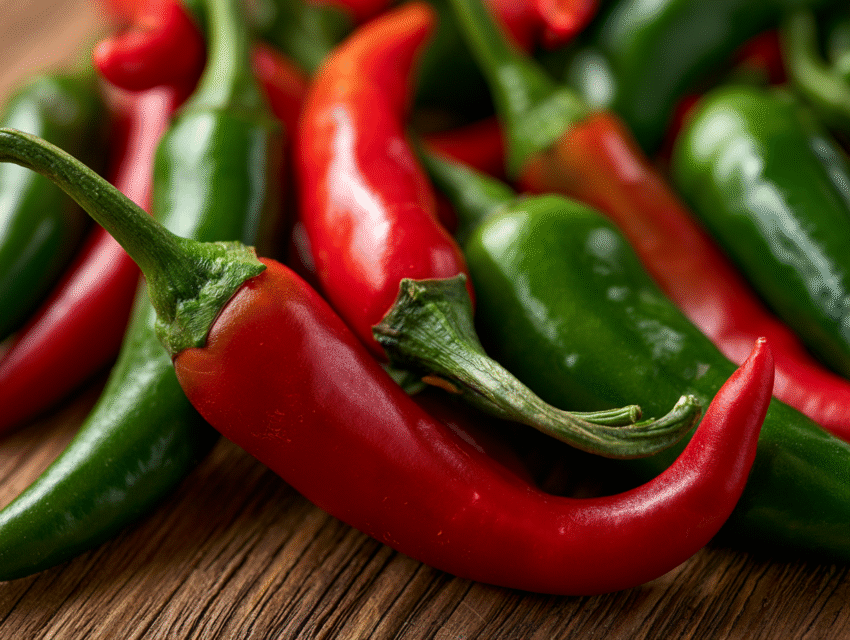
CDC, FDA and health departments in more than two dozen states are investigating an outbreak of SalmonellaJaviana linked to fresh jalapeño peppers. As of August 5, 345 people in 27 states are confirmed sick, 36 have been hospitalized, and no deaths have been reported. The peppers were grown by a single grower in Sinaloa, Mexico and brought into the United States by Coast Citrus Distributors, a California company. The grower has not been publicly named.
Where did people get sick?
Almost entirely at restaurants. Of 191 people interviewed, 177 had eaten at a Mexican-style restaurant, and investigators identified 27 separate illness clusters at Chipotle Mexican Grill and QDOBA locations across seven states. Other Mexican-style restaurants are involved as well. Meal dates run from June 14 to July 14.
How many people are really sick?
Far more than 345, and this is worth understanding because it is true of every foodborne outbreak. For every laboratory-confirmed Salmonella infection, many more never get counted — people who never see a doctor, and people who see one but are never cultured.
CDC’s FoodNet researchers first measured that ratio at approximately 38.6 infections for every culture-confirmed case (Voetsch AC, et al., “FoodNet Estimate of the Burden of Illness Caused by Nontyphoidal Salmonella Infections in the United States,” Clinical Infectious Diseases 2004;38 Suppl 3:S127–S134). A later national burden estimate used a lower multiplier of 29.3 (Scallan E, et al., “Foodborne Illness Acquired in the United States — Major Pathogens,” Emerging Infectious Diseases 2011;17:7–15). CDC’s most recent update, published in 2025 using 2017–2019 FoodNet data, raised it back to roughly 39, concluding that the earlier method had underestimated how much illness goes undiagnosed (“Foodborne Illness Acquired in the United States — Major Pathogens, 2019,” Emerging Infectious Diseases 2025;31(4)).
Applied to 345 confirmed cases, those multipliers put the real number of infections somewhere on the order of 10,000 to 13,000 people. Nobody will ever count them. That is not a failure specific to this outbreak — it is the ordinary gap between what surveillance sees and what actually happened.
Is it still going on? Am I at risk if I eat at Chipotle or QDOBA today?
Both chains removed the affected peppers after being notified, and CDC and FDA have said they do not consider either chain a current ongoing risk. The most recent confirmed illness began on July 20. That said, the outbreak is not formally over, other restaurants that bought the same peppers have not been publicly identified, and FDA is still working out where else the product went.
What about jalapeños in my refrigerator?
FDA has said Coast Citrus does not appear to supply jalapeños directly to grocery stores and is still checking whether any reached retail through other hands. If you cannot determine where your fresh jalapeños came from, the government’s advice is to ask your store or supplier, and to throw them out if they came from Sinaloa, Mexico through Coast Citrus Distributors. If you cannot get an answer and you are in a high-risk group, throwing them out is the cautious choice – “When in Doubt, Throw it Out.”
Has there been a recall?
Yes, but not the kind you can look up. FDA recommended a recall and Coast Citrus agreed to pull its remaining implicated product and notify its customers directly. There is no published recall notice, no lot codes, no ship dates and no list of who received the peppers. That is why a restaurant, or a shopper cannot check a package against anything.
What about jarred, pickled, canned or cooked jalapeños?
Not implicated. This outbreak involves raw fresh peppers. Pickling and canning processes and ordinary cooking temperatures kill Salmonella. The risk here comes from peppers eaten raw — in salsa, pico de gallo, guacamole, and as a fresh topping.
Will washing peppers make them safe?
No. Rinsing reduces surface bacteria somewhat but does not reliably eliminate Salmonella, particularly from the crevice where the stem meets the fruit. There is no home wash, vinegar soak or produce rinse that makes a contaminated pepper safe.
What are the symptoms, and when do they start?
Diarrhea, fever and stomach cramps, usually beginning 6 hours to 6 days after eating contaminated food. Most people get better in four to seven days without specific treatment.
When should I see a doctor?
Get medical care for diarrhea lasting more than three days that is not improving; bloody diarrhea; a fever over 102°F; vomiting so severe you cannot keep liquids down; or signs of dehydration — very little urine, dry mouth, dizziness on standing. Infants, adults over 65, pregnant women and anyone with a weakened immune system should call a doctor early rather than waiting.
Should I ask to be tested?
Yes, and it matters more than most people realize. A stool culture is the only way to confirm Salmonella, and only cultured cases get sequenced and counted. If your infection is never cultured, you are invisible to this investigation. Ask specifically for a stool culture, not only a rapid panel, because public health laboratories need the actual isolate. Whether people get tested tracks closely with how sick they look: CDC’s FoodNet researchers estimated about 9.8 infections for every confirmed case involving bloody diarrhea, against 67.7 for every confirmed case involving nonbloody diarrhea. People with ordinary diarrhea stay home, and the outbreak never learns they existed.
Do I need antibiotics?
Most people should not take them — antibiotics are not routinely recommended for uncomplicated Salmonellaand can prolong shedding. That is a decision for your doctor. One detail worth mentioning to a treating physician: two isolates in this outbreak carry resistance, one to multiple drugs including reduced susceptibility to ciprofloxacin, and one to azithromycin. If antibiotics are needed, drug choice should be guided by susceptibility testing.
Are the numbers going to go up?
Almost certainly. It takes roughly three to four weeks to determine whether a newly reported illness belongs to an outbreak, so illnesses that began in mid-July are only now working their way into the count.
Why are Minnesota and Colorado so much higher than everywhere else?
Because those two states look hardest. Minnesota and Colorado each report 110 cases; every other state is in single or low double digits, and eight states report exactly one. That is not a map of where the peppers went. It is a map of which state laboratories aggressively sequence Salmonella isolates and interview patients quickly. Somebody who ate the same pepper in a state that does not investigate as thoroughly simply does not appear in the count.
Who is most likely to get seriously ill?
Children under five, adults over 65, pregnant women, and people with weakened immune systems — from cancer treatment, transplant medication, diabetes, liver disease, or HIV. Twelve percent of people in this outbreak have been hospitalized, which is a high rate for Salmonella.
Can a Salmonella infection cause lasting problems?
Sometimes. Reactive arthritis — joint pain and swelling that can persist for months — develops in a small percentage of cases. Post-infectious irritable bowel syndrome can follow as well. Rarely, Salmonella enters the bloodstream and seeds infection elsewhere in the body. Tell your doctor about a recent Salmonella infection if joint or bowel symptoms appear weeks later.
What should I keep if I got sick?
Receipts, credit card statements, delivery app records, and any leftover product in its original packaging — bag it, label it, and refrigerate or freeze it. Write down what you ate, where and on what date, and when your symptoms started. Report the illness to your local or state health department; that call is what puts you in the investigation. If you sought medical care, ask whether a stool culture was done and request the result.
Should I talk to a lawyer?
That is your call, and you do not need one to report an illness or to get medical care. If you were hospitalized, missed significant work, or are dealing with lasting complications, it is reasonable to get advice about your options. Any lawyer worth talking to will tell you the same things listed above first: get treated, get cultured, and report it.
Where can I follow the investigation?
CDC’s outbreak page and FDA’s outbreak investigation table are the two primary sources. Note that the two agencies have not always been in step — as of this writing FDA’s table still showed an older case count and listed the product as not yet identified after CDC had already named the distributor and growing region. Following www.marlerblog.com is good too.