

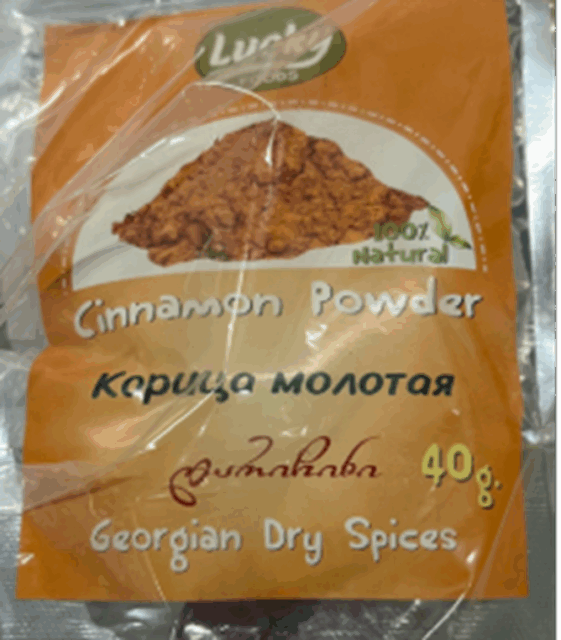
TBC Distribution Corporate of Brooklyn, NY is recalling Lucky Foods brand Cinnamon Powder 40g, best before date 15.09.2027 because it has the potential to be contaminated with elevated levels of lead. Short term exposures to very low levels of lead may not elicit any symptoms. It is possible that increased blood lead levels may be the only apparent sign of lead exposure. Additional signs and symptoms of lead exposure are more likely with acute exposure to higher levels of lead or chronic exposure to lead. While lead can affect nearly every bodily system, its effects depend upon the amount and duration of lead exposure and age/ body weight. If a child is exposed to enough lead for a protracted period of time (e.g., weeks to months) permanent damage to the central nervous system may occur. This can result in learning disorders, developmental defects, and other long-term health problems. For adults, chronic lead exposure is associated with kidney dysfunction, hypertension, and neurocognitive effects.
Lucky Foods brand Cinnamon Powder was distributed to retailers such as, grocery stores, convenience stores, super markets, deli’s, bakeries, and restaurants located in California, Florida, Georgia, Illinois, Maryland, Michigan, North Carolina, New Jersey, New York, Ohio, Oregon, Pennsylvania, South Carolina, and Texas between 04/11/2025 and 09/01/2025.
The product is packaged in a vacuum or modified atmosphere 40g pouch with a brown label indicating Lucky Foods brand at the top of the pouch.
The ongoing issue with lead in cinnamon stems from intentional adulteration (adding lead to increase weight/appearance) and environmental contamination (lead from soil/industrial waste entering the bark), causing significant health risks, especially for children, leading to major recalls (like the 2023 applesauce pouch incident) and continuous FDA warnings and testing of various brands for elevated lead levels, with investigations into foreign supply chains still active.
Why is there lead in cinnamon?
Economic Adulteration (Intentional): Suppliers sometimes add lead dust to cinnamon to make it heavier and look shinier, increasing its perceived value and profit.
Environmental Absorption (Natural/Accidental): Cinnamon trees can absorb lead from contaminated soil, potentially from historic leaded gasoline runoff or industrial pollution, which concentrates in the bark.
Processing Contamination: Lead can also enter the spice through contaminated processing equipment, storage containers, or packaging during manufacturing.
Why is this an ongoing problem?
Widespread Supply Chain: Most cinnamon comes from overseas (like Sri Lanka, where the applesauce outbreak originated), with less rigorous safety enforcement in some countries.
Major Health Risks: Lead exposure, even at low levels, can cause serious developmental issues, learning disabilities, and neurological problems, particularly in young children.
ersistent FDA Action: The FDA is continuously issuing alerts and testing products, finding elevated levels in numerous brands (e.g., WanaBana, Schnucks, Weis), indicating the problem isn’t isolated.
Post-Incident Focus: The major 2023 applesauce pouch outbreak highlighted the issue, leading to ongoing investigations into the source and broader surveillance of the spice market.